PitchPlus vs. SubmitHub and Groover: Why Intelligence Beats Spraying Credits in 2026
In 2026, 68% of indie artists waste their pitching budgets on bot-driven playlists and misaligned curators.
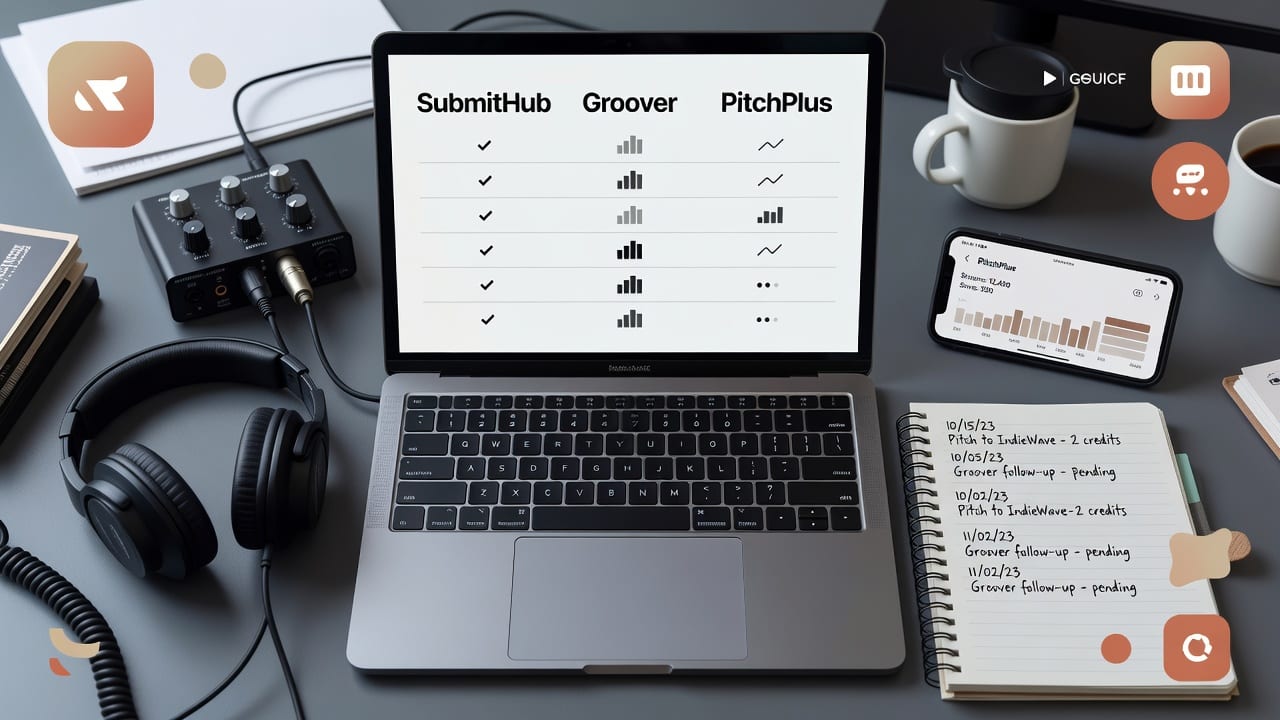
PitchPlus ranks 75 live playlists upstream, preventing wasted SubmitHub and Groover credits on fake curators.
The 2026 Playlist Pitching Landscape
The 2026 independent music landscape is defined by a massive oversupply of content, with over 120,000 tracks hitting streaming platforms daily. This saturation has spawned a predatory secondary market: bot-driven, fake Spotify playlists designed to drain marketing budgets. Post-release indie artists frequently fall into the trap of buying credits on submission platforms without verifying the destination, resulting in algorithmic damage and zero genuine fan acquisition.
SubmitHub and Groover remain the dominant execution layers for playlist pitching. They provide the infrastructure to send music to curators and guarantee a response. However, they are fundamentally routing networks, not intelligence engines. If an artist selects the wrong genres, misidentifies their micro-niche, or targets curators with inflated follower counts, the platform will still process the transaction. The credits are spent, but the results are nonexistent.
This structural flaw necessitates an upstream intelligence layer. Before spending a single dollar on submission credits, artists must filter the ecosystem. Learning how to spot fake Spotify playlists before wasting SubmitHub credits is no longer a manual task; it requires algorithmic analysis. PitchPlus Smart Playlist Finder operates exactly in this upstream position, analyzing over 44,000 playlists to identify genuine, active curators before the artist initiates the pitching phase.
How Upstream Intelligence Changes the Game
Understanding the mechanical difference between intelligence and execution is critical for a profitable 2026 release strategy. PitchPlus does not replace the submission transaction; it dictates where that transaction should occur. The Smart Playlist Finder ingests a track's sonic profile, current algorithmic footprint, and genre tags, cross-referencing this data against a live database of 44,000+ playlists.
The output is a highly targeted, ranked list of 75 live playlists specifically suited for that exact song. This ranking prioritizes listener retention rates, follower growth authenticity, and historical placement success. By isolating these 75 high-probability targets, PitchPlus eliminates the guesswork that plagues manual curator selection. Artists are no longer scrolling through endless directories trying to guess if a "Chill Indie" playlist actually has active listeners or just bot farms in distant server racks.
Applying this data transforms the pitching process from a gamble into a calculated investment. Finding the best playlists for your song using upstream intelligence ensures that when you do move to an execution platform, your approval odds are mathematically optimized. You are pitching to curators who have a documented history of supporting your specific sonic niche, drastically reducing rejection rates based on poor fit.
SubmitHub vs. Groover: The Execution Layer
| Platform | Approval Rate | Best For | Feedback Style |
|---|---|---|---|
| SubmitHub | 10-15% | US/UK micro-genres, data-driven targeting | Strict, actionable critiques |
| Groover | Higher baseline | Europe/Latin America, relationship building | Less rigid, sometimes less detailed |
SubmitHub vs Groover at a glance
Groover utilizes a slightly different architecture, focusing heavily on relationship building and the European market. The feedback mandates are less rigid than SubmitHub's, which often results in a higher baseline approval rate but occasionally less detailed critiques. Groover excels when targeting tastemakers in France, Germany, and Latin America, or when an artist prioritizes building long-term communication channels with bloggers and radio hosts alongside playlist curators.
Choosing between them is not a binary decision; it is a routing exercise.
Cost-Benefit and Waste Reduction
The financial argument for upstream intelligence is rooted in waste reduction. In 2026, premium submission credits cost between $1.50 and $3.00 each. An artist executing a standard post-release campaign might purchase 100 credits, representing a $150 to $300 investment. Without upstream filtering, industry data indicates that up to 60% of those credits are spent on misaligned genres, inactive curators, or disguised bot playlists. That is $90 to $180 instantly burned per release.
Integrating PitchPlus alters this cost-benefit equation. By restricting credit expenditure exclusively to the 75 live, verified playlists ranked by the Smart Playlist Finder, the waste percentage drops to near zero. Every credit purchased is deployed against a mathematically validated target. The initial investment in the intelligence tool pays for itself by preventing the purchase of doomed submission credits.
This methodology also protects the artist's Spotify algorithmic profile. Sending traffic from fake playlists triggers Spotify's anti-manipulation algorithms, potentially resulting in shadowbans or track takedowns. Finding real Spotify curators post-release is not just about gaining streams; it is about feeding Spotify's algorithm clean, high-retention data that triggers algorithmic multipliers like Discover Weekly and Release Radar.
The Ideal 2026 Release Workflow
1. Scan with PitchPlus
Input the track into the Smart Playlist Finder right after release to generate a ranked list of 75 live playlists matched to the song's sonic profile.2. Route to the right platform
Cross-reference the top targets to see which curators sit on SubmitHub, which on Groover, and which need direct email.3. Buy credits in exact quantities
Purchase only the credits needed for the verified targets on each platform, with no bulk or speculative buys.
Upon receiving the ranked list of 75 live playlists, the artist performs a platform routing analysis. They cross-reference the top targets to see which curators reside on SubmitHub, which are on Groover, and which require direct email outreach. Credits are then purchased in exact quantities to match the verified targets on each respective platform. There is no bulk buying or speculative pitching.
This sequential approach maximizes ROI and minimizes algorithmic risk. Understanding how playlist platform routing fits into a 2026 release strategy separates successful independent artists from those perpetually burning marketing budgets. By placing intelligence upstream of execution, artists ensure their music only reaches curators capable of delivering genuine, engaged listeners.
| Primary Function | Fake Playlist Protection | Cost Structure | Best For | |
|---|---|---|---|---|
| PitchPlus Smart Playlist Finder | Upstream Intelligence & Ranking | High (Algorithmic filtering of 44k+ lists) | Subscription / Flat Tool Access | Identifying the top 75 real targets before spending credits |
| SubmitHub | Pitch Execution & Feedback | Medium (Curator vetting, but relies on artist targeting) | Pay-per-pitch (Credits) | Strict feedback and US/UK micro-genre targeting |
| Groover | Pitch Execution & Networking | Medium (Curator vetting, but relies on artist targeting) | Pay-per-pitch (Grooviz) | European market penetration and relationship building |
Recommendations
- If you need to identify real, high-converting playlists and avoid bot-driven waste before spending money...: ...pick PitchPlus Smart Playlist Finder as your upstream intelligence layer.
- If you have your verified target list and need strict, data-driven feedback with strong US/UK market reach...: ...pick SubmitHub for the execution phase.
- If you have your verified target list and want to build long-term relationships or penetrate the European market...: ...pick Groover for the execution phase.
Frequently Asked Questions
Does PitchPlus replace SubmitHub or Groover?
No. PitchPlus is an upstream intelligence tool. It tells you who to pitch to by ranking 75 live, verified playlists out of 44,000+. You then use SubmitHub or Groover to actually execute the pitch to those specific curators, saving you from wasting credits on bad targets.
How does upstream intelligence prevent wasted credits?
Without intelligence, artists guess which curators might like their song, often buying credits for inactive or fake playlists. Upstream intelligence analyzes data to prove a playlist is active and relevant to your specific sonic profile before you buy the credit to pitch them.
Why are fake Spotify playlists dangerous in 2026?
Fake playlists use bots to generate streams. Spotify's 2026 anti-manipulation algorithms detect this artificial traffic, which can result in your track being shadowbanned from algorithmic playlists (like Discover Weekly) or completely removed from the platform.
Should I use SubmitHub or Groover after finding my targets?
It depends on where your verified targets live. SubmitHub is excellent for strict feedback and US/UK targeting, while Groover is better for relationship building and European markets. A smart strategy routes pitches to both platforms based on the curator's preference.
Reading is the easy part.
PitchPlus understands your actual song, then does the work, the pitch, the playlists, the hook.
Get your Spotify editorial pitch written
The pitch plus the genre and mood metadata Spotify routes on, written from your actual song. Not a 500 character box you fill in blind.
Match your song to the right Spotify playlists
Every playlist match scored against what your song actually is, then ranked by fit.
Find your song's viral hook
The best 30 seconds of your song for Reels and TikTok, found automatically.