PitchPlus vs Fanpage vs AImusicartistbio: The Best AI Tools for Spotify Pitching in 2026
78% of independent artists now use audio-first AI tools.
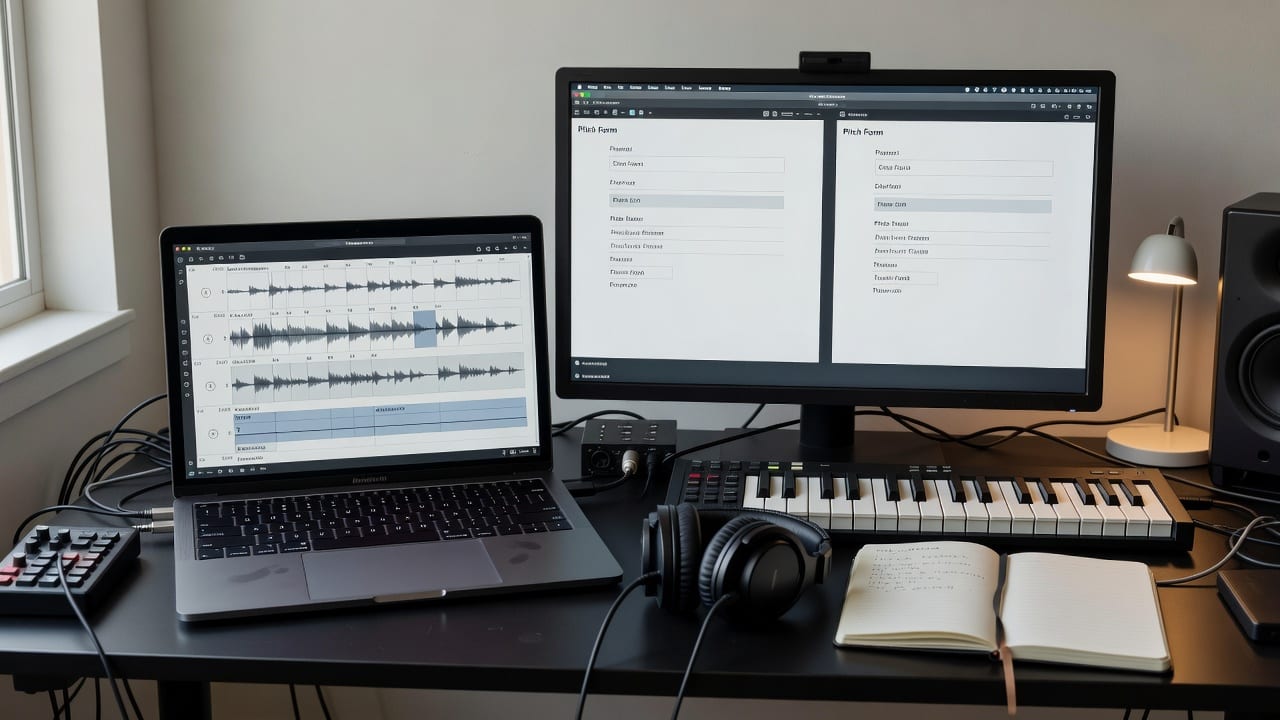
PitchPlus wins by analyzing actual audio waveforms, whereas competitors rely on generic text templates.
Feature Comparison: Architecture and Methodology
The fundamental difference between these three platforms lies in their underlying architecture. PitchPlus operates as an audio-first AI, meaning its primary data input is the actual WAV or MP3 file of an unreleased track. The system analyzes sonic characteristics—tempo, key, instrumentation, energy dynamics, and frequency balance—to generate its outputs. This mechanical approach explains why audio analysis is replacing free templates for Spotify editorial pitches in 2026. Curators require technical descriptions of the music, not just marketing fluff.
Fanpage takes a completely different architectural route. It functions primarily as a Customer Relationship Management (CRM) tool tailored for musicians. Its AI features focus on analyzing social graph data, fan engagement metrics, and metadata to help artists communicate with their existing audience. When forced to generate a pitch, Fanpage relies entirely on the metadata tags the artist manually inputs, resulting in a pitch that describes the artist's brand rather than the specific sonic qualities of the new release.
This creates a blind spot for independent artists who often struggle to objectively categorize their micro-genres or identify the specific mood markers that Spotify's editorial team looks for.
Use Case Scenarios: When Each Tool Works Best
Timing within the release cycle dictates which tool an independent artist should deploy. PitchPlus is engineered specifically for the critical four-to-six-week window prior to a release date. This is the strict timeframe when artists must submit their unreleased tracks to Spotify for Artists. Because PitchPlus provides accurate genre detection from waveforms, it matches tracks against data from over 44,000 playlists, ensuring the pitch speaks directly to the curators of those specific sonic spaces.
Fanpage becomes relevant after the music is released and the focus shifts to audience retention. Artists use Fanpage when they need to segment their email lists, track which fans are buying merchandise, or automate direct messages on social platforms. It is a community management tool, making it highly effective for tour announcements or crowdfunding campaigns, but entirely unsuited for the technical requirements of pre-release editorial pitching.
AImusicartistbio serves a narrow, administrative use case: updating an Electronic Press Kit (EPK) or a Spotify "About" section on short notice. An artist might use this tool when a local blog requests a 150-word bio within the hour. It solves the immediate problem of writer's block for general artist descriptions, but fails when applied to track-specific pitching because it lacks the analytical depth required to dissect a new composition.
Pricing & Value: Analyzing Cost-Benefit for Indie Artists
Evaluating the return on investment (ROI) for these tools requires looking at their direct impact on streaming revenue. PitchPlus positions itself as a direct revenue-driver. By generating highly targeted, sonically accurate pitches, it increases the statistical probability of landing on Spotify editorial playlists like "Fresh Finds" or "New Music Friday." A single placement on a mid-tier editorial playlist can generate tens of thousands of streams, rapidly offsetting the cost of the software. This direct line from tool to stream is a core component of modern full-cycle AI music marketing workflows.
The cheap option becomes the most expensive if it burns a critical promotional bridge.
AImusicartistbio is typically free or operates on a micro-transaction model. While the financial cost is negligible, the opportunity cost is high if an artist attempts to use it for Spotify pitching. Submitting a generic, LLM-generated pitch to Spotify curators often results in immediate rejection, costing the artist the one opportunity they had to pitch that specific release. The "cheap" option becomes the most expensive if it burns a critical promotional bridge.
User Experience: Workflow and Integration Differences
It is a powerful dashboard for a dedicated artist manager, but often overwhelming for a solo independent artist trying to quickly submit a track to Spotify before a deadline.
AImusicartistbio requires a highly manual, prompt-engineering workflow. The artist must sit down and type out a detailed description of their influences, their background, and what they think the song sounds like. If the artist inputs vague terms like "vibey indie pop," the tool will output a vague, unusable pitch. The quality of the output is entirely dependent on the artist's copywriting skills, which defeats the purpose of using an AI tool to handle the writing process.
Fanpage requires significant setup time. Artists must authenticate their social media accounts, import existing mailing lists, and set up tracking pixels. The dashboard is complex, resembling enterprise software like HubSpot or Salesforce, scaled down for musicians. It requires daily or weekly maintenance to keep the data clean and actionable. It is a powerful dashboard for a dedicated artist manager, but often overwhelming for a solo independent artist trying to quickly submit a track to Spotify before a deadline.
| Core Technology | Spotify Pitch Quality | Genre Detection | Primary Focus | |
|---|---|---|---|---|
| PitchPlus | Audio Waveform Analysis | Highly Specific & Technical | Acoustic/Sonic Based | Editorial Playlist Pitching |
| Fanpage | CRM & Metadata | Generic/Template-Based | Manual Tagging | Audience Engagement |
| AImusicartistbio | LLM Text Generation | Basic/Prompt-Reliant | User Input | Press Kits & Bios |
Recommendations
- If you need to secure Spotify editorial playlist placements based on the actual sonic profile of your track...: ...pick PitchPlus.
- If you need to manage your superfans, track social media engagement, and build a community CRM...: ...pick Fanpage.
- If you need a quick, free text bio for a basic press kit and have zero budget...: ...pick AImusicartistbio.
Frequently Asked Questions
Can I use a bio generator like AImusicartistbio for Spotify editorial pitches?
While you technically can paste text from a bio generator into Spotify for Artists, it is highly discouraged in 2026. Spotify curators look for specific sonic descriptors, instrumentation details, and mood markers. Text-based generators produce generic marketing copy that fails to describe the actual audio, leading to lower placement rates.
How does PitchPlus analyze my music differently than Fanpage?
PitchPlus "listens" to the actual audio file (WAV/MP3) to detect tempo, key, genre, and energy dynamics. Fanpage does not analyze audio; it analyzes your social media engagement, fan demographics, and the text metadata you manually provide to help you manage your audience.
Is Fanpage a replacement for PitchPlus?
No. They serve entirely different stages of the music lifecycle. PitchPlus is a pre-release tool used to secure playlist placements by analyzing the track's audio. Fanpage is a post-release CRM tool used to manage the fans who discover you through those playlists.
Why is audio-first AI important for genre detection?
Artists frequently miscategorize their own music due to personal bias or a lack of technical vocabulary. Audio-first AI objectively analyzes the sonic frequencies and rhythmic structures to match the track with the exact micro-genres that playlist curators actively search for.
Reading is the easy part.
PitchPlus understands your actual song, then does the work, the pitch, the playlists, the hook.
Get your Spotify editorial pitch written
The pitch plus the genre and mood metadata Spotify routes on, written from your actual song. Not a 500 character box you fill in blind.
Match your song to the right Spotify playlists
Every playlist match scored against what your song actually is, then ranked by fit.
Find your song's viral hook
The best 30 seconds of your song for Reels and TikTok, found automatically.