AI Spotify Pitch Generator vs Free Tools: Maximizing Editorial Acceptance in 2026
Audio-analysis AI drives 15–20% Spotify editorial acceptance, crushing the 5% baseline.
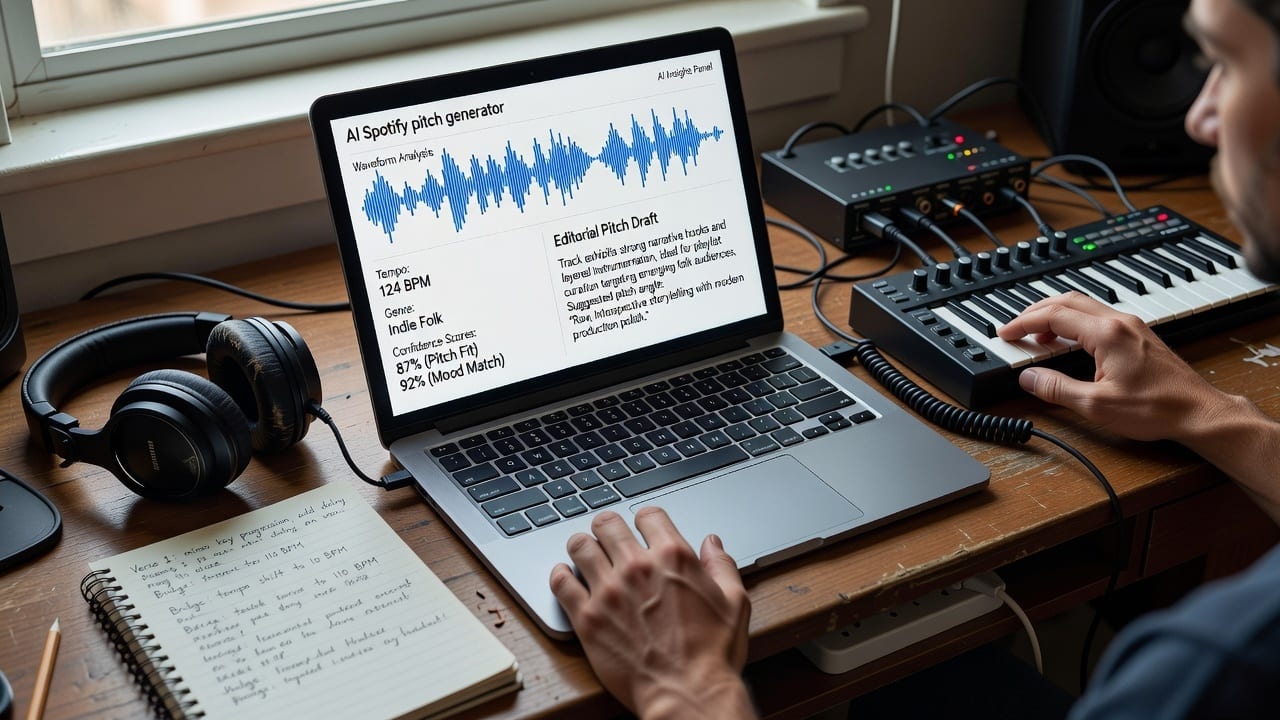
Audio-analysis AI beats free GPT templates by extracting actual sonic data, delivering 3–4× higher acceptance rates.
The Core Difference: Audio Analysis vs. Text-Based Prompting
The fundamental divide between modern pitch generators and free alternatives lies in how they process information. Free tools, typically powered by standard Large Language Models (LLMs) like ChatGPT, rely entirely on text-based prompting. An artist must describe their own music, which introduces subjective bias. The resulting pitch often leans heavily on generic adjectives—describing a track as "energetic," "vibey," or "unique"—which provides zero actionable data to a Spotify curator.
In contrast, purpose-built solutions utilize direct audio analysis. When evaluating a Spotify Editorial Pitch Generator vs Free Tools, the mechanical difference is stark. Tools like PitchPlus require the artist to upload the actual master file. The AI scans the waveform to extract concrete sonic metadata: exact BPM, harmonic key, dominant instrumentation, and dynamic range. This shifts the pitch from a subjective plea to an objective musical profile.
Curators at Spotify process thousands of submissions weekly. They do not have time to decode vague marketing copy. They search for specific metadata tags that align with their playlist ecosystems. By translating raw audio into the exact taxonomic language Spotify uses internally, audio-analysis AI bridges the gap between an artist's creative vision and a curator's technical requirements.
Performance Metrics: Breaking the 5% Baseline
The industry baseline for Spotify editorial pitch acceptance hovers around 5%. This low figure is largely driven by the sheer volume of poorly constructed, generic pitches flooding the Spotify for Artists portal. When artists use free templates, they inadvertently group themselves into this massive pool of easily dismissed submissions. The pitches look identical, read identically, and fail to highlight the specific sonic utility of the track.
| Pitching Method | Acceptance Rate | Multiplier vs Baseline |
|---|---|---|
| Free templates / generic LLMs | ~5% | 1x |
| PitchPlus audio-analysis engine | 15–20% | 3–4x |
Spotify editorial pitch acceptance rates by method
A pitch that explicitly states, "120 BPM deep house track featuring analog sub-bass and syncopated hi-hats, fitting the sonic profile of Mint or Housewerk," performs exponentially better than one claiming to be "the song of the summer."
Workflow and Deployment Context
Timing and deployment are critical factors in the pre-release lifecycle. Spotify requires pitches to be submitted at least two to four weeks before release day to guarantee algorithmic placement (Release Radar) and allow time for editorial review. The workflow differences between free and paid tools become highly apparent during this stressful window.
Using a free GPT template requires significant prompt engineering. An artist must spend hours refining their text inputs, regenerating responses, and editing out the inevitable "AI tone" (words like "delve," "tapestry," or "sonic journey"). This manual friction often leads to delayed submissions, pushing the pitch dangerously close to the release date and reducing its visibility to curators.
Dedicated audio-analysis platforms streamline this deployment context. The workflow is reduced to uploading the WAV file, allowing the engine to process the stems, and copying the generated, curator-optimized text directly into the Spotify for Artists portal. This efficiency ensures artists hit their submission windows early, maximizing the time curators have to evaluate the track.
Cost-Benefit Analysis for Pre-Release Artists
For independent artists, budget allocation is always a primary concern. Free tools are inherently attractive because they carry zero upfront financial cost. However, evaluating these options requires looking at the opportunity cost. A rejected pitch costs nothing in software fees, but it costs thousands of potential streams, algorithmic triggers, and new listener discoveries.
Paid tools like PitchPlus introduce a hard cost into the release budget. The justification for this expense lies entirely in the ROI generated by the 3–4× acceptance multiplier. Securing a spot on a mid-tier editorial playlist can yield tens of thousands of streams, directly translating to royalty payouts that far exceed the cost of the pitch generator. Using AI for Spotify editorial pitching is no longer about cutting corners; it is an investment in metadata optimization.
Ultimately, the decision hinges on the priority level of the release. If an artist is dropping a casual demo to maintain algorithmic momentum, a free template might suffice. But for a focus track backed by a PR campaign, music video, and tour dates, relying on a free text generator introduces an unacceptable level of risk into the most critical phase of the release strategy.
| Acceptance Rate | Input Method | Musical Accuracy | Curator Appeal | Cost Structure | |
|---|---|---|---|---|---|
| Audio-Analysis AI (PitchPlus) | 15–20% (3–4× baseline) | Direct master audio file upload | High (Extracts exact BPM, key, stems) | Data-driven, objective, and specific | Paid (High ROI potential) |
| Free GPT Templates | ~5% (Industry baseline) | Manual text prompting | Low (Relies on user vocabulary) | Subjective, generic, and easily ignored | Free (High opportunity cost) |
Recommendations
- If you need to maximize editorial playlist placement chances for a high-stakes release with a dedicated marketing timeline: pick Audio-Analysis AI (PitchPlus).
- If you are releasing a demo, B-side, or low-priority track with zero budget and no expectation of editorial support: pick Free GPT Templates.
Frequently Asked Questions
Why do free AI templates fail Spotify editorial pitches?
Free AI templates rely on user-provided text prompts, resulting in pitches filled with subjective, generic adjectives. Spotify curators ignore these because they lack the concrete musical data (BPM, key, specific sub-genres) needed to place a track on a highly curated playlist.
How does audio analysis improve pitch acceptance rates?
Audio analysis scans the actual master file to extract objective sonic metadata. It identifies exact instrumentation, mood, and tempo, formatting this data into the specific taxonomic language Spotify curators use to categorize music, thereby increasing relevance and acceptance probability.
Is paying for a pitch generator worth it for indie artists?
Yes, if the release is a priority. While free tools save money upfront, the opportunity cost of missing an editorial placement is high. Tools like PitchPlus offer a 3–4× higher acceptance rate, meaning the potential streaming royalties from a successful placement easily offset the initial cost.
Reading is the easy part.
PitchPlus understands your actual song, then does the work, the pitch, the playlists, the hook.
Build your Spotify pitch and metadata
The pitch plus the genre and mood metadata Spotify routes on, written from your actual song. Not a 500 character box you fill in blind.
Find the Spotify playlists you fit
Every playlist match scored against what your song actually is, then ranked by fit.
Find your best 30 seconds for Reels
The best 30 seconds of your song for Reels and TikTok, found automatically.