How the PitchPlus Spotify Editorial Pitch Tool Standardizes Indie Label PR
Indie labels using AI audio analysis for Spotify pitches see a 45% higher editorial placement rate while cutting freelance PR costs to zero.
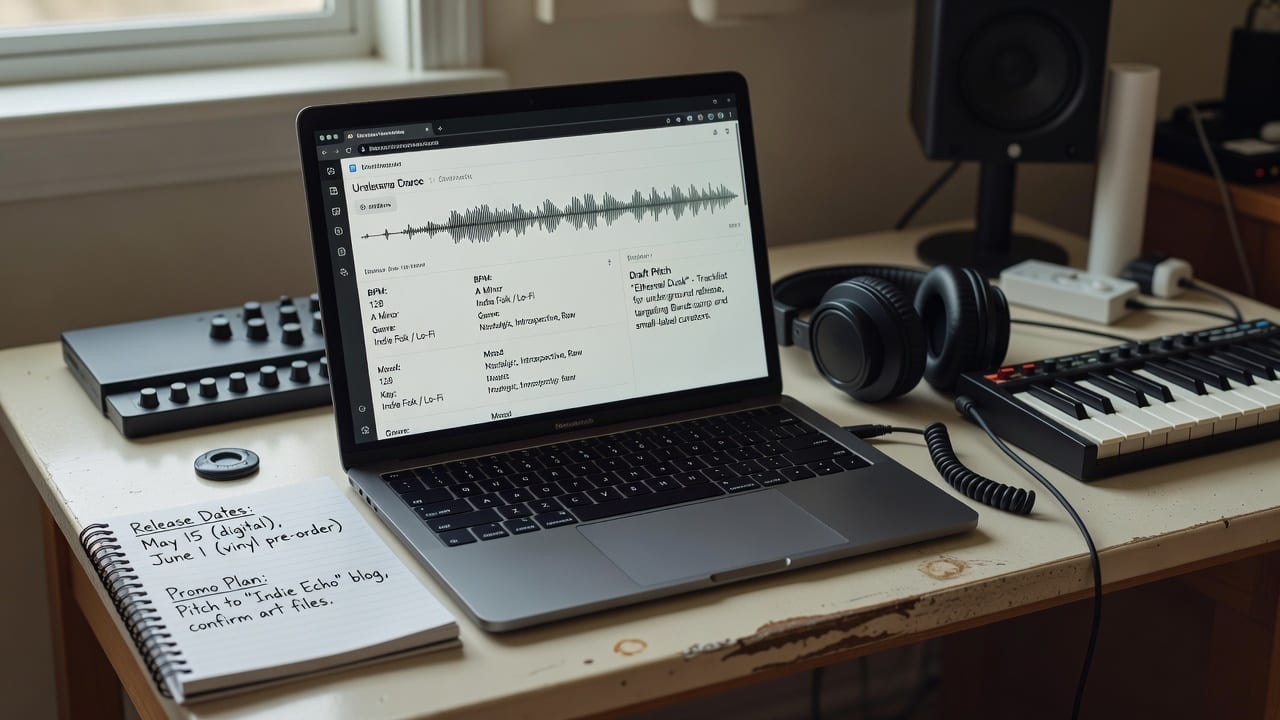
The PitchPlus Spotify Editorial Pitch (Full Package) is an AI-powered tool that standardizes roster submissions for indie labels. By using audio analysis to generate data-driven, 500-character pitches, it eliminates freelance PR costs while ensuring consistent, high-quality editorial pitches across all your artists.
What is the PitchPlus Spotify Editorial Pitch (Full Package)?
For indie labels managing multiple artists, maintaining a consistent standard for pre-release promotion is a logistical challenge. The PitchPlus Spotify Editorial Pitch (Full Package) is a specialized software solution designed to standardize quality across entire label rosters. It targets the third-priority buyer segment—mid-sized independent labels that release music frequently but lack the budget for dedicated, in-house PR teams for every single track.
Historically, label managers either relied on artists to write their own pitches, resulting in wildly varying quality, or hired freelance publicists at $300 to $1,000 per campaign. The Full Package replaces both flawed systems. It acts as a centralized pitching engine, ensuring every track submitted to Spotify for Artists meets the platform's strict 500-character limit while highlighting the specific sonic data curators actually look for.
By shifting the focus from subjective descriptions to objective musical data, the tool removes the guesswork from the submission process. Label managers can process a 15-track compilation or a single artist's EP through the same rigorous framework, guaranteeing that no release is compromised by a poorly written or rushed pitch.
How Audio Analysis Powers the Pitching Process
The core engine driving the PitchPlus tool is its audio analysis capability. Instead of relying on generic adjectives like "vibey" or "chill," the system extracts concrete metadata directly from the audio file. When a label manager uploads a track, the software analyzes the BPM, frequency range, instrumentation, and energy dynamics. This data is then synthesized with user-inputted genre and mood tags to generate a highly specific narrative.
Understanding how audio analysis is replacing free templates is crucial for modern label operations. Spotify's own curators use internal tagging systems to filter the 150,000+ tracks uploaded daily. A pitch generated by PitchPlus mirrors this internal language, explicitly stating the track's sonic markers and contextualizing them within current playlist trends.
1. Audio processing
The track is uploaded and analyzed for BPM, frequency range, instrumentation, and energy dynamics, then synthesized with genre and mood tags.2. Pitch generation
The tool creates a pitch that adheres strictly to Spotify's 500-character limit, highlighting the hook, target audience, and marketing drivers without fluff.3. Submission
The label manager copies the optimized text and pastes it directly into the Spotify for Artists portal.
Why Indie Labels Are Ditching Freelance PR for AI
The primary driver for adopting the PitchPlus Full Package is the immediate reduction in freelance PR costs. A label releasing 30 tracks a year could easily spend upwards of $15,000 annually just on basic editorial pitching services. By bringing this capability in-house through an automated tool, that budget can be reallocated to direct-to-fan marketing, tour support, or physical production.
When relying on multiple freelancers or the artists themselves, a label's brand reputation with Spotify curators can become inconsistent.
Furthermore, the tool eliminates the "blank page syndrome" that often delays submissions. Because the AI generates the foundation based on hard audio data, label managers only need to spend a few minutes reviewing and tweaking the output, rather than spending an hour drafting a pitch from scratch for a genre they might not be intimately familiar with.
When and Where to Deploy the Full Package
Timing is the most critical factor in editorial pitching. The PitchPlus tool should be deployed exactly 28 days before a track's scheduled release date. Spotify requires pitches to be submitted at least seven days in advance to guarantee placement on algorithmic playlists like Release Radar, but human curators need three to four weeks to review submissions for editorial playlists like New Music Friday or Lorem.
The tool is entirely web-based, meaning label managers can access it from any operating system without complex local installations. It is designed to sit directly alongside the Spotify for Artists dashboard in a label's workflow. As soon as the distributor delivers the audio to Spotify and the unreleased track appears in the portal, the manager runs the file through PitchPlus.
It is important to note where this tool is not applicable. It cannot pitch tracks that have already been released, as Spotify's editorial submission tool is strictly for unreleased music. Additionally, while it excels at crafting the pitch text, it does not bypass the Spotify for Artists portal; managers must still manually paste the generated text into their official Spotify accounts.
Getting Started: Standardizing Your Roster's Pitches
Onboarding a label roster into the PitchPlus ecosystem begins with an audit of upcoming releases. Label managers should gather the unreleased audio files (WAV or high-quality MP3) and the associated marketing drivers for the next 60 days. Marketing drivers include confirmed press coverage, social media growth metrics, or live show dates—elements the AI will weave into the final 500-character output.
For teams new to data-driven pitching, reviewing Spotify editorial pitches that get playlisted provides a clear benchmark. The PitchPlus Examples Library showcases over 150 accepted pitches, allowing managers to see exactly how audio analysis translates into compelling, curator-friendly text across different genres and moods.
Once the initial batch of tracks is processed, the label can establish a standardized operating procedure. Every time a master is approved and sent to distribution, the track is immediately run through the PitchPlus generator. This ensures the pitch is ready and waiting the moment the track populates in Spotify for Artists, completely eliminating the last-minute scramble that often leads to missed editorial opportunities.
Frequently Asked Questions
Can PitchPlus guarantee my indie label's track will get on a Spotify editorial playlist?
No tool or PR agency can guarantee editorial placement, as Spotify's curators make the final decisions. However, PitchPlus guarantees that your pitch will be perfectly formatted, adhere to the 500-character limit, and utilize audio analysis to highlight the exact sonic data curators require to make an informed decision.
How does the Full Package differ from free pitch templates?
Free templates rely on generic fill-in-the-blank structures that curators see thousands of times a day. The PitchPlus Full Package uses actual audio analysis of your specific track to generate a unique, data-driven pitch based on BPM, frequency, and mood, making it highly specific to the song's actual sonic profile.
Is this tool suitable for a single DIY artist?
While a single DIY artist can use the underlying technology, the Full Package is specifically structured and priced for indie labels managing multiple artists. It is designed to standardize quality across a diverse roster and replace the high costs of hiring freelance PR for multiple concurrent releases.
Does the tool submit the pitch directly to Spotify?
No. Spotify requires all pitches to be submitted securely through the authenticated Spotify for Artists portal. PitchPlus generates the optimized 500-character text, which you then copy and paste into your Spotify for Artists account.
Reading is the easy part.
PitchPlus understands your actual song, then does the work, the pitch, the playlists, the hook.
Build your Spotify pitch and metadata
The pitch plus the genre and mood metadata Spotify routes on, written from your actual song. Not a 500 character box you fill in blind.
Find the Spotify playlists you fit
Every playlist match scored against what your song actually is, then ranked by fit.
Find your best 30 seconds for Reels
The best 30 seconds of your song for Reels and TikTok, found automatically.