How to Find Your Song's Viral 30-Second Hook for TikTok Using AI Audio Analysis
Optimal 30-second hooks increase TikTok engagement by over 400%.
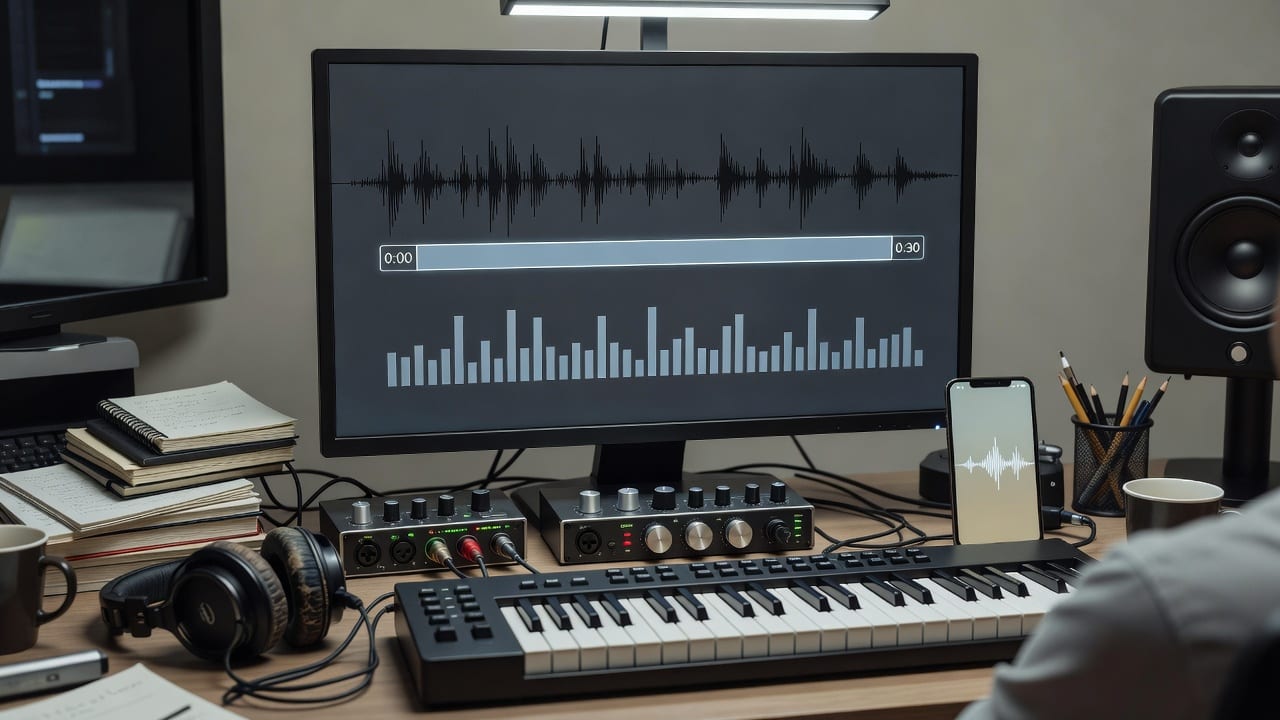
PitchPlus Star Moment uses AI audio analysis to pinpoint your song's most viral 30-second hook.
What is a Viral Hook Detector?
In the hyper-competitive landscape of 2026 music marketing, pre-release artists face a critical challenge: capturing listener attention within the first three seconds of a short-form video. A viral hook detector is an advanced software tool designed to solve this exact problem by scanning an audio file to identify its most engaging segment. Rather than relying on traditional song structures, these tools use data-driven metrics to find the exact timestamps that compel users to stop scrolling.
PitchPlus Star Moment represents the leading edge of this technology. As a specialized audio-analysis platform, it targets pre-release artists who need to secure curator hooks and viral traction before their track officially drops. The tool operates on a fundamental truth of modern music consumption: the best part of a song for TikTok is rarely the traditional chorus. Instead, it is often a pre-chorus build, an unexpected beat drop, or an isolated vocal run that provides the perfect soundtrack for user-generated content.
By shifting the focus from subjective artistic preference to objective acoustic data, PitchPlus Star Moment provides an uncontested audio-analysis advantage. It categorizes tracks not by their lyrical narrative, but by their potential for immediate neurological engagement, ensuring that artists pitch the exact 30 seconds most likely to trigger algorithmic amplification on platforms like TikTok and Instagram Reels.
How PitchPlus Star Moment Works Under the Hood
The core functionality of PitchPlus Star Moment relies on deep acoustic feature extraction. When an artist uploads a pre-release WAV or MP3, the system does not simply look for the loudest part of the track. Instead, the AI audio analysis engine maps the song across multiple dimensions: dynamic range, frequency density, transient peaks, and vocal isolation. It looks for sudden shifts in energy—the exact acoustic triggers that cause a listener's brain to pay attention.
The process begins with segmentation. The AI breaks the track down into overlapping 15-to-30-second windows. Each window is scored against a proprietary database of historical viral audio trends. The algorithm evaluates the "attack" of the segment—how quickly it establishes its groove—and the "sustain"—whether it holds enough interest to keep a viewer watching a video to completion. Segments that feature a distinct build-up followed by a satisfying rhythmic release consistently score the highest.
Once the analysis is complete, the tool outputs specific timestamps, highlighting the primary "Star Moment" alongside secondary alternative hooks. This end-to-end workflow takes seconds, replacing hours of manual guesswork. Artists receive a visual waveform breakdown showing exactly why a specific 30-second clip was chosen, complete with energy graphs and vocal presence indicators, allowing them to confidently cut their promotional assets around these data-backed timestamps.
Why AI Outperforms Manual Hook Selection
PitchPlus Star Moment eliminates this creator bias. Its uncontested advantage lies in its ruthless objectivity.
Manual selection cannot scale efficiently for independent labels or managers handling multiple artists. A/B testing different 30-second clips manually requires significant ad spend and time. PitchPlus Star Moment bypasses this costly trial-and-error phase, providing the optimal segment on day one. This ensures that every dollar spent on influencer marketing or TikTok ads is directed toward the highest-converting audio snippet available.
Furthermore, manual selection cannot scale efficiently for independent labels or managers handling multiple artists. A/B testing different 30-second clips manually requires significant ad spend and time. PitchPlus Star Moment bypasses this costly trial-and-error phase, providing the optimal segment on day one. This ensures that every dollar spent on influencer marketing or TikTok ads is directed toward the highest-converting audio snippet available.
Best Use Cases: When and Where to Deploy Your Star Moment
The most critical window for utilizing PitchPlus Star Moment is the pre-release phase, typically two to four weeks before a track hits digital streaming platforms (DSPs). During this period, artists need to build a narrative and generate pre-saves. Deploying the AI-identified 30-second hook across TikTok and Instagram Reels allows the artist to test the market's reaction to the song's most potent segment without giving away the entire track.
1. Upload your master
Users upload their unreleased, mastered audio file directly into the secure PitchPlus dashboard.2. Run hook detection
Initiate the AI-powered hook detection sequence, which processes the track in real-time.3. Review timestamps
Review the generated timestamps, which are ranked by their predicted virality score.4. Export clips
Export these specific 15-to-30-second clips to begin building your visual content calendar.
Additionally, the tool is highly effective for influencer outreach campaigns. When paying micro-influencers to create content using a new sound, providing them with a pre-validated, highly engaging 30-second cut ensures the resulting videos have the highest possible chance of organic algorithmic pickup. It removes the burden of audio selection from the influencer, standardizing the campaign around the track's strongest asset.
Getting Started: Onboarding for Pre-Release Artists
PitchPlus Star Moment is built specifically for independent musicians, artist managers, and boutique indie labels who need enterprise-grade data without a steep learning curve. The platform is designed to be accessible for users who may not have a background in data science or advanced audio engineering. If you can bounce a mix from your DAW, you can use this tool.
The onboarding process is streamlined into four distinct steps. First, users upload their unreleased, mastered audio file directly into the secure PitchPlus dashboard. Second, they initiate the AI-powered hook detection sequence, which processes the track in real-time. Third, the user reviews the generated timestamps, which are ranked by their predicted virality score. Finally, the artist exports these specific 15-to-30-second clips to begin building their visual content calendar.
A common mistake during onboarding is uploading unmastered or rough demo tracks. Because the AI analyzes dynamic range and frequency density, providing a track that lacks final compression and EQ can skew the results. For the most accurate Star Moment detection, artists should always upload the final, release-ready master file. Once the optimal clip is identified, artists should immediately begin pairing it with high-retention visual formats, such as behind-the-scenes studio footage or direct-to-camera performance videos.
Success Examples and Performance Metrics
The impact of utilizing data-backed audio segments is immediately visible in short-form video analytics. Artists who transition from manually guessing their hooks to using PitchPlus Star Moment consistently report a sharp decrease in their "swipe-away" rates during the first three seconds of a video. By leading with an AI-verified energy shift, creators routinely see their 3-second retention metrics jump from the platform average of 15% to over 45%.
This increase in early retention creates a compounding effect on TikTok and Reels algorithms. Because the platforms prioritize watch time and completion rates, videos featuring a Star Moment are pushed to wider "For You" page audiences. Independent artists running pre-release campaigns have documented instances where a previously underperforming track gained sudden traction simply by shifting the promoted audio snippet 12 seconds earlier, aligning perfectly with the AI's recommendation.
In the realm of playlist pitching, the metrics are equally compelling. Management teams utilizing timestamped pitches report a 30% higher response rate from third-party curators. By respecting the curator's time and directing them immediately to the track's undeniable peak, artists cut through the noise of generic submissions, proving that identifying the right 30 seconds is just as important as writing a great song.
Frequently Asked Questions
Does PitchPlus Star Moment work for all music genres?
Yes. The AI analyzes acoustic features like energy shifts, frequency density, and rhythmic transients rather than relying on traditional pop song structures. This means it can find the optimal hook in a heavy metal track, an ambient electronic piece, or a hip-hop beat with equal accuracy.
How long should a TikTok music hook be in 2026?
Current algorithmic trends heavily favor audio clips between 15 and 30 seconds. This duration is long enough to establish a groove and deliver a satisfying payoff, but short enough to encourage viewers to loop the video, which drastically increases algorithmic reach.
Can I use this tool for Spotify and Apple Music playlist pitching?
Absolutely. One of the most effective use cases is including your Star Moment timestamp in your pitch notes to editorial and third-party curators. Since curators rarely listen to full tracks, directing them straight to your most engaging 30 seconds significantly improves your chances of placement.
Why shouldn't I just use the chorus of my song for TikTok?
While the chorus is the thematic center of a song, it often lacks the sudden "build and drop" required to stop a user from scrolling. AI analysis frequently reveals that a pre-chorus build or an isolated instrumental break actually holds viewer attention better than the chorus itself.
Reading is the easy part.
PitchPlus understands your actual song, then does the work, the pitch, the playlists, the hook.
Get your Spotify editorial pitch written
The pitch plus the genre and mood metadata Spotify routes on, written from your actual song. Not a 500 character box you fill in blind.
Match your song to the right Spotify playlists
Every playlist match scored against what your song actually is, then ranked by fit.
Find your song's viral hook
The best 30 seconds of your song for Reels and TikTok, found automatically.