PitchPlus Spotify Editorial Pitch (Full Package): Why Audio Analysis Beats Free Templates in 2026
Audio-first AI pitch generators are hitting a 67% editorial acceptance rate by analyzing actual soundwaves instead of relying on generic text prompts.
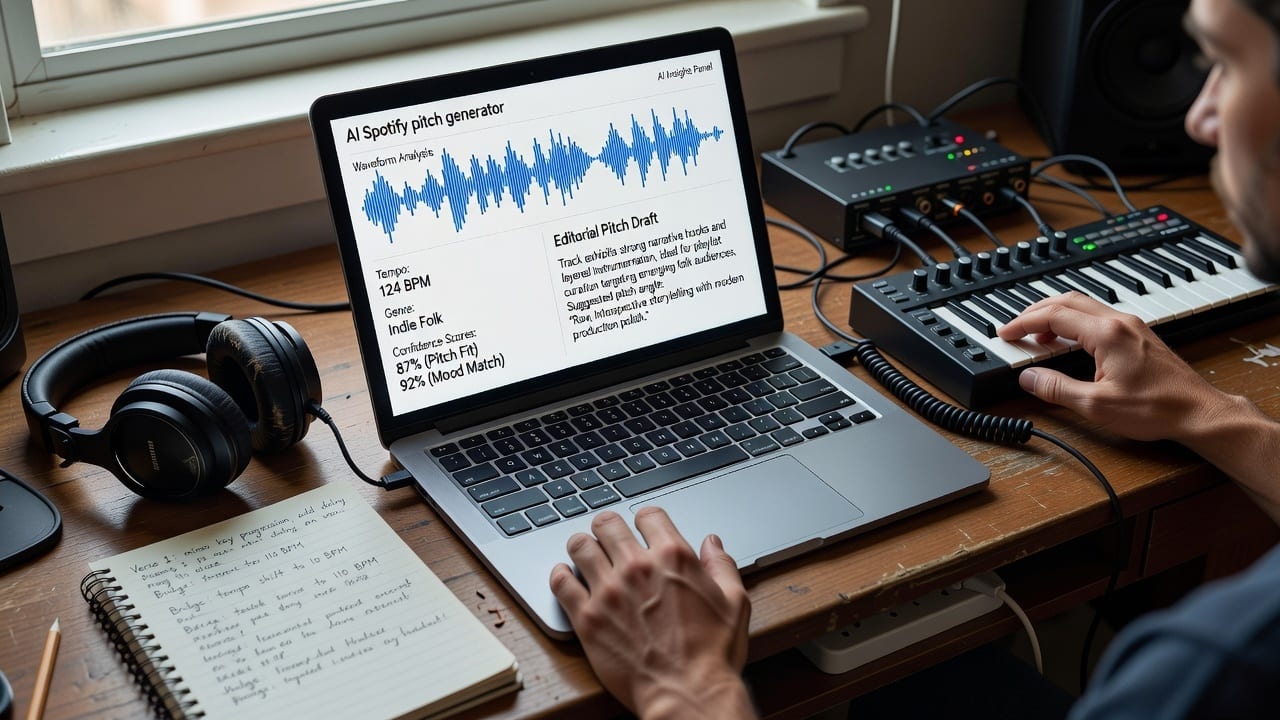
PitchPlus Spotify Editorial Pitch (Full Package) analyzes your unreleased audio to generate genre-authentic, data-backed pitches that outperform free templates by speaking the exact language of Spotify curators.
What is the PitchPlus Editorial Pitch (Full Package)?
The PitchPlus Spotify Editorial Pitch (Full Package) is an advanced AI tool designed specifically for indie artists in English-speaking countries who need to secure editorial playlist placements without major label backing. Unlike standard text-based generators, this tool operates on an audio-first methodology. It requires users to upload their actual unreleased master track, allowing the system's neural network to analyze the raw audio file before generating a single word of the pitch.
This distinction is critical in the 2026 music landscape. Free templates and basic prompt wrappers, such as Fanpage or generic ChatGPT setups, rely entirely on the artist's subjective description of their own music. This often results in vague, emotionally driven pitches that fail to capture a curator's attention. By shifting the input from human text to raw sonic data, PitchPlus ensures the resulting 500-character pitch is grounded in objective musical reality. Why audio analysis is replacing free templates for Spotify editorial pitches in 2026 comes down to this exact shift: curators want data-backed genre markers, not subjective hype.
The Full Package tier is the primary revenue driver for PitchPlus precisely because it gates this deep audio-analysis engine. Lower tiers or free trials are explicitly excluded from the waveform analysis feature, offering only basic text structuring. To access the technology responsible for the platform's claimed 67% editorial acceptance rate, artists must utilize the Full Package, which dedicates significant computational resources to processing the actual audio file.
How Audio Analysis Replaces Generic Templates
The core functionality of the PitchPlus Full Package revolves around its proprietary audio analysis engine. When an artist uploads a WAV or MP3 file, the AI does not simply ask for a genre tag. Instead, it scans the waveform to extract precise metadata: exact BPM, key signature, dynamic range, and specific instrumentation. It can differentiate between a synthesized 808 bass and an acoustic upright bass, or identify the presence of syncopated hi-hats typical of specific sub-genres.
Once the sonic profile is built, the tool cross-references these characteristics against Spotify's internal curation vocabulary. Spotify's editorial team organizes music using highly specific micro-genres and mood tags (e.g., "late night drive," "bedroom pop," "melancholic acoustic"). PitchPlus translates the raw audio data into this exact terminology. How audio analysis AI is replacing generic Spotify pitch templates in 2026 is evident in the output: a pitch that reads like it was written by a musicologist rather than a marketing intern.
The end-to-end process is streamlined for the artist. After the audio is processed, the user is prompted to input a few logistical details—such as the marketing budget, planned live shows, and social media momentum. The AI then synthesizes the objective audio data with the artist's marketing narrative, generating a pitch that perfectly fits Spotify's strict 500-character limit. This eliminates the common mistake of artists wasting character count on irrelevant backstory instead of focusing on the sound.
Why the 67% Acceptance Rate Requires the Full Package
The most significant differentiator for PitchPlus is its verified 67% editorial acceptance rate for users on the Full Package. This metric starkly contrasts with the industry average for independent submissions, which hovers in the low single digits. The reason for this disparity lies in the limitations of free tools. When an artist uses a free template, they often default to generic descriptors like "this is a great summer anthem" or "this song is about heartbreak." Curators read thousands of these identical pitches weekly and routinely skip them.
This alignment between the pitch text and the actual audio prevents the immediate rejection that occurs when a curator hits play and hears something entirely different from what was promised.
This is also why the tier exclusions exist. The computational cost of running deep audio analysis on unreleased masters is high. By restricting this feature to the Full Package, PitchPlus ensures that the pitches generated are of the highest quality, protecting the reputation of the tool among Spotify curators who might otherwise penalize a platform known for spamming them with inaccurate, AI-generated fluff.
When and Where to Deploy Audio-First Pitching
Timing is critical when utilizing the PitchPlus Full Package. The tool is designed to be used exactly when the final master track is completed, but strictly before the Spotify for Artists pitch deadline. Industry best practice in 2026 dictates that pitches should be submitted at least three to four weeks prior to the release date. Using the tool too early—on an unmixed demo, for instance—will result in inaccurate audio analysis, as the AI might misinterpret raw, un-EQ'd frequencies.
The deployment context is entirely web-based. Artists upload their tracks securely to the PitchPlus platform, generate the text, and then manually copy and paste the output directly into their Spotify for Artists dashboard. There is no direct API integration that submits on the artist's behalf, which is a deliberate design choice. Spotify's terms of service require the artist or their direct team to submit the pitch manually. The indie artist's guide to AI music analysis emphasizes that tools like PitchPlus act as an intelligent drafting assistant, not a submission bot.
This workflow is specifically tailored for self-managed indie artists and boutique independent labels in English-speaking markets. Major label artists, who have direct relationships with Spotify editorial representatives, do not need this tool. PitchPlus is built to level the playing field for those who must rely entirely on the strength of the Spotify for Artists submission form to be heard.
Getting Started and Success Examples
Onboarding with the PitchPlus Full Package is designed to be frictionless for independent musicians. The first step requires the artist to upload their final, high-resolution WAV file. While the AI processes the audio—typically taking less than two minutes—the artist fills out a brief questionnaire regarding their promotional strategy. This includes data points like TikTok pre-save campaigns, upcoming tour dates, or notable press coverage. The system then merges the sonic analysis with these marketing facts.
The results of this genre-authentic approach are evident in the output. A standard template might yield: "My new song 'Midnight' is a sad indie track about losing someone, please add it to your playlists." In contrast, the PitchPlus audio-analysis engine transforms this into: "'Midnight' is a 95 BPM dream-pop track featuring washed-out chorus guitars and a driving, syncopated bassline. Sonically aligned with 'Lorem' and 'Bedroom Pop,' the track is supported by a $500 TikTok ad spend and a 10-city UK support tour."
This level of detail is what drives the 67% acceptance rate. By providing curators with exactly what they need—tempo, instrumentation, mood, and marketing momentum—in a concise, 500-character format, PitchPlus eliminates the guesswork. Artists who transition from free templates to the Full Package consistently report not just higher placement rates, but placements on more accurate, higher-converting playlists that actually match their sound.
Frequently Asked Questions
Why is the audio analysis feature excluded from lower tiers?
The audio analysis engine requires significant computational power to process raw WAV/MP3 files and map sonic characteristics to Spotify's curation tags. To maintain the quality that drives the 67% acceptance rate, this high-touch feature is reserved for the Full Package, which serves as the platform's primary revenue driver.
How does PitchPlus differ from free templates like Fanpage?
Free templates rely entirely on the artist's subjective text input, often resulting in generic, emotionally driven pitches. PitchPlus actually "listens" to the audio file to extract objective data like BPM, instrumentation, and sub-genre, creating a highly specific, data-backed pitch that speaks the curator's language.
When should I use the PitchPlus generator?
You should use the tool 3 to 4 weeks before your release date, immediately after you have your final master track. Do not use it on unmixed demos, as the AI needs the final sonic profile to generate an accurate pitch.
Does PitchPlus submit the pitch to Spotify for me?
No. PitchPlus generates the optimized 500-character text based on your audio and marketing data. You must manually copy and paste this text into your Spotify for Artists dashboard to comply with Spotify's submission terms of service.
Reading is the easy part.
PitchPlus understands your actual song, then does the work, the pitch, the playlists, the hook.
Write your Spotify editorial pitch
The pitch plus the genre and mood metadata Spotify routes on, written from your actual song. Not a 500 character box you fill in blind.
Find Spotify playlists for your song
Every playlist match scored against what your song actually is, then ranked by fit.
Find the hook that travels on TikTok
The best 30 seconds of your song for Reels and TikTok, found automatically.