The 2026 Guide to Crafting a Spotify Editorial Pitch with Audio Analysis
Indie artists using audio-first analysis to craft their Spotify editorial pitches are seeing up to a 67% acceptance rate compared to generic templates.
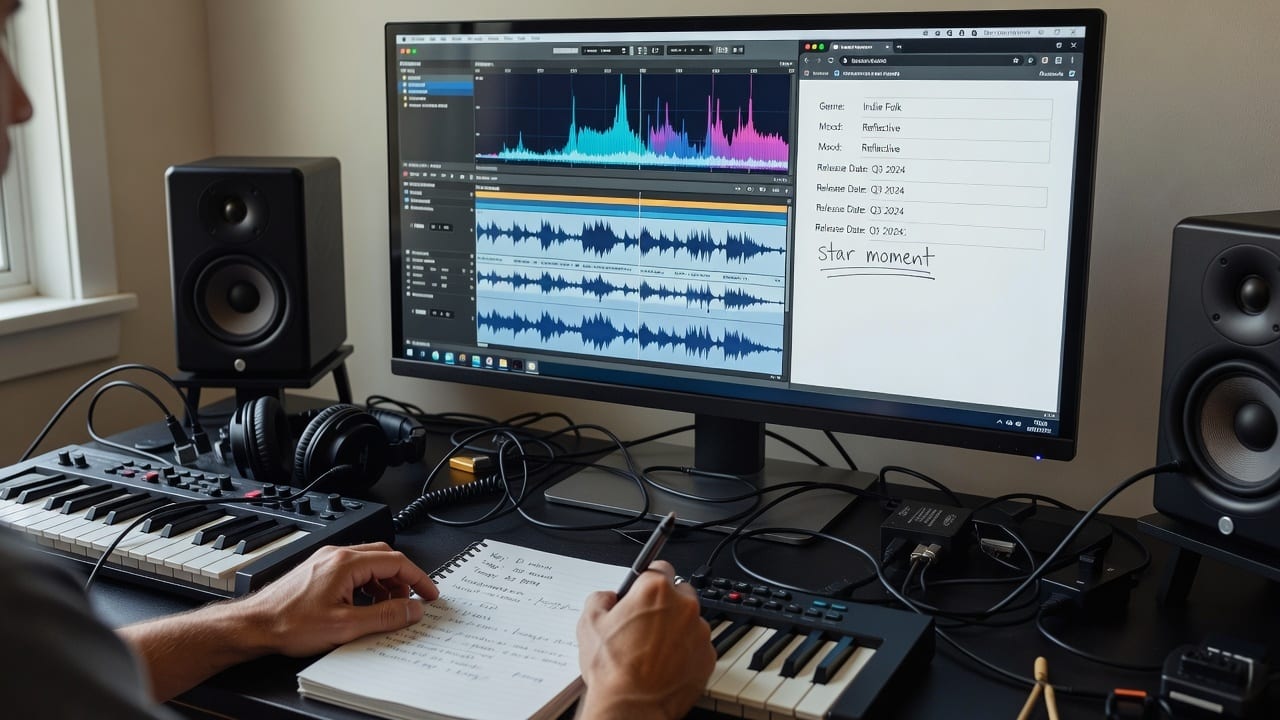
To create an effective Spotify editorial pitch, abandon copy-paste templates and use audio analysis to identify your track's exact genre markers, mood, and 'Star Moment.' Tools like the PitchPlus Full Package translate these sonic data points into a genre-authentic, English-only pitch designed specifically for Spotify's curation team.
What Makes an Audio-First Pitch Different?
In 2026, Spotify's editorial team receives hundreds of thousands of pitches every week. The traditional method of using copy-paste templates focused on an artist's biography or vague promotional hype no longer works. Curators do not have time to read about your childhood influences; they need to know exactly what your song sounds like, where it fits in their ecosystem, and why their listeners will not skip it.
An audio-first pitch flips the script. Instead of starting with the artist's story, it starts with the song's sonic data. This involves breaking down the track's instrumentation, BPM, mood, and sub-genre authenticity. By leading with hard data, you provide curators with the exact metadata they use to categorize music on the backend.
This is where solutions like the PitchPlus Full Package come into play. By utilizing advanced audio analysis, the Full Package translates raw sonic data into a highly structured, genre-authentic narrative. For a deeper dive into how this data transforms your submission, review Refresh: How to Write a Spotify Editorial Pitch That Gets Accepted in 2026. The end result is a pitch that speaks the curator's language, focusing entirely on the listening experience rather than marketing fluff.
When to Pitch (and When to Hold Back)
Timing is just as critical as the content of your pitch. The Spotify for Artists system requires lead time not just for human curators to review the track, but for the algorithm to process the metadata for Release Radar and Discover Weekly. You must submit your pitch a minimum of 14 to 21 days before your release date.
If you are within 7 days of your release, you have missed the optimal window. Pitching this late drastically reduces your chances of editorial review and almost guarantees your track will not be seeded to your followers' Release Radar on day one. In these cases, it is often better to delay the release to ensure proper runway.
The PitchPlus Full Package is optimized specifically for US, UK, Canada, Australia, and New Zealand indie artists. Because the natural language processing used to generate the narrative is highly tuned to Western editorial standards, the service is strictly English-only. If you are targeting non-English regional playlists, this specific framework will not align with those local curation standards. For more on timeline requirements, see How to Write a Spotify Editorial Pitch That Gets You Playlisted.
How to Craft the Pitch Using Audio Analysis
Building a data-driven pitch requires a systematic approach. You cannot simply guess your BPM or assume your track fits a specific micro-genre. The process must be rooted in verifiable audio analysis.
Step 1: Extracting Pre-Release Metadata
Before writing a single word, run your unreleased master through an audio analysis tool. You need to identify the exact tempo, key, energy level, and acousticness. This data forms the foundation of your pitch's tags. If your song is a 120 BPM synth-pop track with high energy and low acousticness, your pitch must explicitly state these markers so curators can instantly route it to the right playlist category. To understand this extraction phase, read The 2026 Guide to Spotify Uploads: Mastering Pre-Release Audio Analysis and Metadata.
Step 2: Identifying the Star Moment
Curators rarely listen to a full three-minute song during their initial screening. They typically listen to the first 10 to 15 seconds, and then skip to the middle. A critical component of the PitchPlus Full Package is the identification of the "Star Moment"—the exact timestamp where the song peaks, introduces its strongest hook, or delivers its most compelling emotional payoff. You must explicitly include this timestamp (e.g., "Focus on the drop at 1:15") in your pitch to ensure the curator hears the best part of your track.
Step 3: Translating Data into Narrative
Once you have your metadata and Star Moment, weave them into a concise, 500-character narrative. State the genre, highlight the primary instrumentation, provide the Star Moment timestamp, and mention the target mood. Avoid adjectives like "amazing" or "groundbreaking." Stick to objective descriptors like "driving bassline," "ethereal vocals," or "syncopated rhythm."
Overcoming Common Pitching Obstacles
Curators are not music journalists; they are data organizers and mood curators.
Another major obstacle is genre misalignment. An artist might tag their song as "Indie Rock" because they play a guitar, but audio analysis might reveal the track's rhythm and production actually align closer to "Bedroom Pop" or "Shoegaze." Mislabeling your genre guarantees an instant rejection, as the track will be sent to the wrong curation team.
By relying on an audio-first approach, you remove artist bias from the equation. The data dictates the genre tags, ensuring the track is routed correctly. If you struggle with this alignment, learning How to Write a Spotify Editorial Pitch That Drives Algorithmic Consideration can help bridge the gap between what you think your song is and what the algorithm knows it is.
Measuring Success and Understanding Tier Differences
Success in Spotify pitching is not binary. While landing a massive editorial playlist like "New Music Friday" is the ultimate goal, a successful pitch also triggers algorithmic momentum. A well-crafted, data-rich pitch ensures your track is properly categorized for Release Radar, Discover Weekly, and Spotify Radio.
When utilizing tools to help with this process, it is vital to understand tier differences. Basic metadata tools or lower-tier services will simply give you your BPM and key, leaving you to write the pitch yourself. The PitchPlus Full Package differs by taking that raw data and fully constructing the genre-authentic narrative and pinpointing the Star Moment timestamp for you.
However, artists must manage their expectations. While the Full Package boasts a highly impressive 67% acceptance rate for its audio-first pitches, there are absolutely no guarantees in the music industry. Spotify's editorial decisions ultimately come down to human subjectivity, available playlist real estate, and current cultural trends. The goal of audio analysis is not to guarantee placement, but to guarantee that your track is presented flawlessly, giving it the highest possible statistical chance of being playlisted.
Frequently Asked Questions
What is a Star Moment in a Spotify editorial pitch?
A Star Moment is the specific timestamp in your song (e.g., 1:12) where the track peaks, introduces its strongest hook, or delivers its best emotional payoff. Including this in your pitch ensures curators, who often skim tracks, hear the very best part of your song.
How early should I submit my Spotify for Artists pitch?
You should submit your pitch a minimum of 14 to 21 days before your release date. Pitching any later than 7 days prior drastically reduces your chances of editorial review and can prevent your track from appearing on your followers' Release Radar.
Does the PitchPlus Full Package guarantee a playlist placement?
No. While the PitchPlus Full Package utilizes audio analysis that has driven a 67% acceptance rate, there are no guarantees. Spotify's editorial decisions are ultimately subjective, and no service can promise a 100% placement rate.
Why is the PitchPlus Full Package limited to English-only?
The natural language processing and genre-authentic narrative generation used in the Full Package are specifically optimized for the editorial standards of US, UK, Canada, Australia, and New Zealand curators. Therefore, it only supports English-language pitches.
Reading is the easy part.
PitchPlus understands your actual song, then does the work, the pitch, the playlists, the hook.
Build your Spotify pitch and metadata
The pitch plus the genre and mood metadata Spotify routes on, written from your actual song. Not a 500 character box you fill in blind.
Find the Spotify playlists you fit
Every playlist match scored against what your song actually is, then ranked by fit.
Find your best 30 seconds for Reels
The best 30 seconds of your song for Reels and TikTok, found automatically.