The 4-Week Spotify Pitch Rule: Mastering the 2026 Release Calendar
Artists see 40% higher playlist adds using 4-week timing.
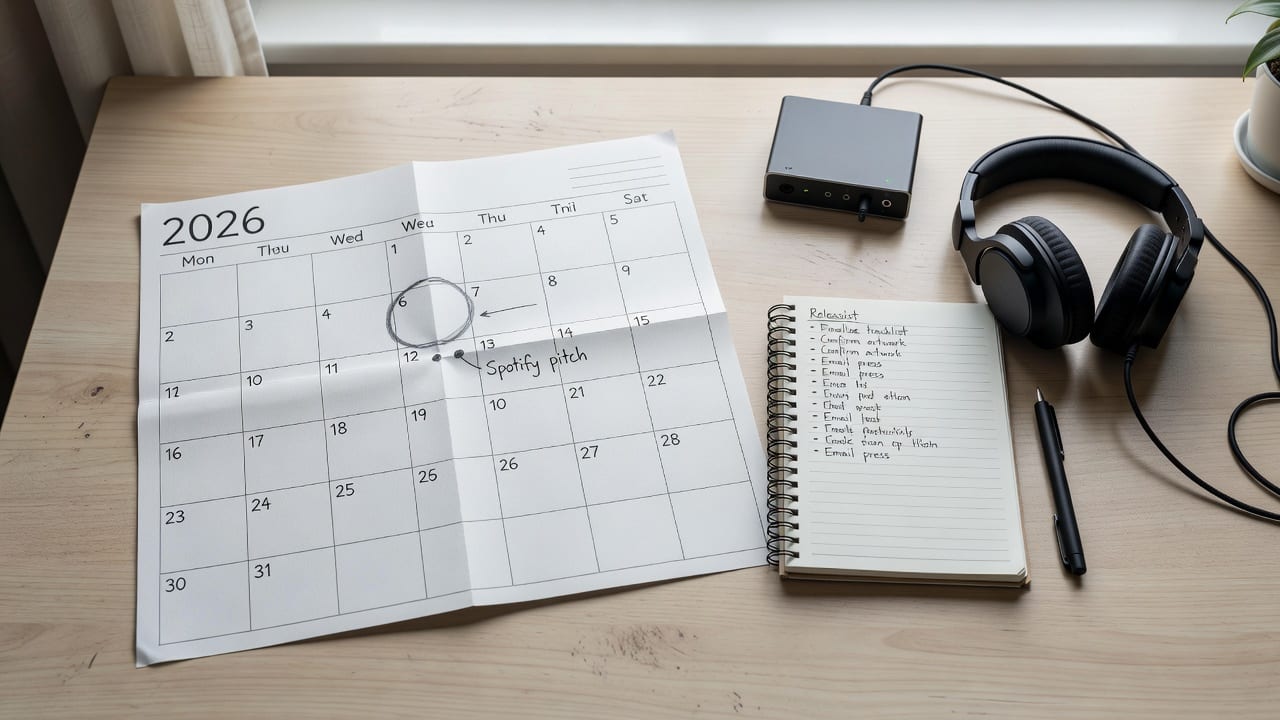
To maximize editorial playlist placement for your 2026 releases, submit your pitch exactly four weeks before release day. This window ensures distributors process your track and Spotify curators have ample time to review your music before the critical spring and fall release rushes.
What is the 4-Week Spotify Pitch Rule?
While technically true for algorithmic placement, seven days is a death sentence for editorial consideration.
The 4-week rule is the industry standard for securing human curator attention. Spotify's editorial team receives tens of thousands of pitches weekly. A 28-day lead time gives these curators the necessary runway to filter, listen, categorize, and slot your track into upcoming editorial updates. If you want a deep dive into the mechanics of this timeline versus distributor processing delays, read When Should I Submit My Pitch to Spotify? The 4-Week Rule Independent Artists Miss.
Success at this stage is defined by two signals: your track appearing in the "Upcoming" tab of your Spotify for Artists dashboard exactly 28 days before release, and the pitch status changing to "Pitched" with a full four weeks to spare. Anything less means you are competing for algorithmic scraps rather than editorial real estate.
When to Pitch: Aligning with the 2026 Spring and Fall Calendars
Timing your pitch requires working backward from your target release date, factoring in the seasonal density of the music industry. The 2026 calendar presents specific challenges during the spring (March through May) and fall (September through November) windows. These are peak periods when major labels push their priority artists, flooding the editorial queue.
If you are planning a fall release for Friday, October 23, 2026, your absolute deadline to hit the "Submit" button in Spotify for Artists is Friday, September 25, 2026. However, your distributor needs time to deliver the audio file and metadata to Spotify's backend. You must upload your master file and artwork to your distributor by Friday, September 18, 2026—a full five weeks out.
Knowing when not to pitch is equally critical. Avoid scheduling releases and pitches during the mid-December to early-January freeze. Spotify curators take holiday leave, and editorial playlists are dominated by seasonal music. Pitching a standard indie release during this blackout period is a primary factor in Why Your Spotify Editorial Pitch Keeps Getting Rejected. Target the clear air of late January or the early spring ramp-up in March instead.
How to Execute the Perfect 4-Week Pitch Workflow
Executing the 4-week rule requires a strict, step-by-step operational workflow. Missing a single metadata field or mistiming the distributor upload breaks the chain, resulting in an unpitchable track.
Step 1: The 5-Week Distributor Upload
Upload your final WAV file, high-resolution artwork, and complete metadata to your distributor exactly 35 days before your release date. Select your target release date carefully. Double-check your ISRC codes and writer splits. Once submitted, monitor your Spotify for Artists dashboard daily. The track usually populates in the "Upcoming" tab within 2 to 5 days.
Step 2: The 4-Week Pitch Construction
The moment your track appears in Spotify for Artists, initiate the pitch. You are required to select a single focus track if your release is an EP or album. Choose the song with the strongest immediate hook—curators often listen to only the first 15 to 30 seconds. You must accurately tag the genre, sub-genres, mood, and instrumentation. Mis-tagging your track sends it to the wrong curator department, guaranteeing a rejection.
Step 3: Crafting the Data-Driven Story
The 500-character pitch box is not for your biography; it is for your marketing data. Curators want to know how you are driving traffic to their platform. Detail your pre-save campaign numbers, your TikTok or Instagram Reels strategy for the 2026 season, and any press coverage secured. For a granular breakdown of identifying your track's "Star Moment" and translating audio-analysis data into compelling copy, study How to Write a Spotify Editorial Pitch That Gets Accepted in 2026.
What Happens After You Pitch? Post-Release Strategy
Once your pitch is submitted, the waiting game begins. You will not receive a confirmation email if you are selected for an editorial playlist prior to release day. The first signal of success usually arrives on release morning via an email from Spotify for Artists notifying you of a playlist add, or by checking the "Playlists" tab in your dashboard.
Even if you miss editorial placement, adhering to the 4-week rule guarantees your track will be injected into the Release Radar of every user who follows your artist profile. This algorithmic trigger is the foundation of your first-week streaming velocity. High engagement on Release Radar (low skip rates, high save rates) trains Spotify's algorithm to push your track into Discover Weekly and Spotify Radio.
Your work does not end on release day. The editorial pitch is strictly a pre-release mechanism. Once the track is live, your focus must shift to independent curator outreach to sustain algorithmic momentum. Using an upstream intelligence layer to identify active, genre-matched curators is mandatory before spending budget on submission platforms. You can map out this secondary phase using The 2026 Guide to Finding Real Spotify Curators Post-Release.
Frequently Asked Questions
Can I edit my Spotify pitch after submitting it?
Yes, you can edit your pitch at any time up until the release date. However, if a curator has already reviewed your track, they will not see the updated pitch. It is best to submit a complete, finalized pitch exactly four weeks out rather than relying on later edits.
What happens if my distributor delays my track and I miss the 4-week window?
If your track appears in Spotify for Artists with less than four weeks to go, pitch it immediately. While your chances for editorial placement decrease significantly, pitching at least seven days before release still guarantees your inclusion on your followers' Release Radar playlists.
Should I pitch a single or an album focus track for a 2026 release?
Spotify only allows you to pitch one unreleased track at a time. If you are releasing an album or EP, you must select one focus track. Choose the song with the strongest commercial appeal and the most compelling marketing story to maximize your chances of editorial selection.
Does the 4-week rule apply to independent curators as well?
No. The 4-week rule is strictly for Spotify's internal editorial team via the Spotify for Artists dashboard. Independent and third-party curators generally prefer to be pitched on release day or shortly after, once the track is live and they can immediately add it to their public playlists.
Reading is the easy part.
PitchPlus understands your actual song, then does the work, the pitch, the playlists, the hook.
Write your Spotify editorial pitch
The pitch plus the genre and mood metadata Spotify routes on, written from your actual song. Not a 500 character box you fill in blind.
Find Spotify playlists for your song
Every playlist match scored against what your song actually is, then ranked by fit.
Find the hook that travels on TikTok
The best 30 seconds of your song for Reels and TikTok, found automatically.