The Upstream Intelligence Layer: Understanding Smart Playlist Finders
Over 30% of third-party Spotify playlists show signs of bot activity, threatening indie artists with algorithmic penalties and account bans.
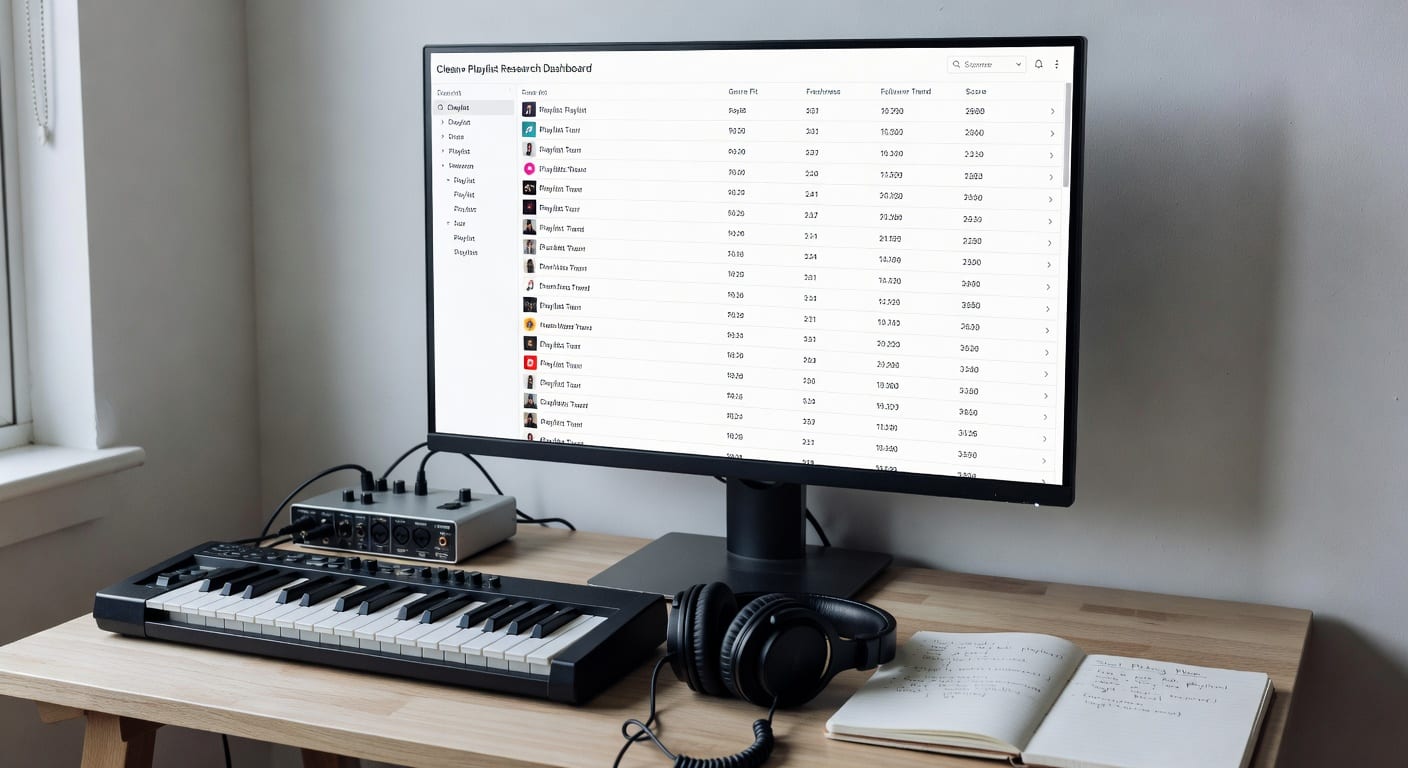
A smart playlist finder is an upstream intelligence tool that analyzes thousands of playlists for genre fit, curator activity, and bot presence. It helps indie artists identify genuine, high-performing playlists before spending money on submission platforms like SubmitHub or Groover.
What Constitutes a Smart Playlist Finder
A smart playlist finder operates fundamentally as an upstream intelligence layer sitting between an independent artist and the broader music submission ecosystem. Rather than functioning as a direct pitching service or a guaranteed placement network, this technology ingests vast amounts of playlist data to evaluate the health, authenticity, and relevance of third-party curators. The system analyzes metrics that are invisible to the naked eye on streaming platforms, such as follower growth velocity, listener-to-follower ratios, and the historical performance of tracks added to specific lists.
This distinction is critical because the modern streaming landscape is saturated with bad actors who sell placements on playlists that generate zero real human engagement.
Mechanically, these systems rely on complex algorithms to cluster genres and track curator behavior over time. If a playlist suddenly gains ten thousand followers overnight but the tracks within it show no corresponding spike in monthly listeners, the smart finder flags the list as highly suspicious. This analytical approach transforms playlist discovery from a guessing game into a data-driven science, ensuring artists only allocate resources toward curators who can genuinely impact their algorithmic standing.
Why Upstream Intelligence is Critical for Modern Releases
For an independent artist, landing on a fake playlist is no longer just a waste of money; it is an existential threat to their catalog.
Beyond the threat of platform penalties, indie artists face a significant financial drain when navigating submission platforms blindly. Networks like SubmitHub, Groover, and Unhurd offer access to thousands of curators, but the quality and relevance of these curators vary wildly. Without a mechanism to identify optimal playlists for post-release promotion, artists frequently waste their marketing budgets pitching to curators who either do not fit their specific micro-genre or manage playlists with stagnant listener bases.
The smart playlist finder solves this dual problem of risk and inefficiency. By providing a transparent score based on genre fit, freshness, and position quality, the tool empowers artists to make informed financial decisions. It shifts the power dynamic away from opaque curators and back to the musician, ensuring that every dollar spent on promotion has a mathematical probability of reaching actual human ears and triggering positive algorithmic feedback loops.
When to Deploy Playlist Analytics in the Release Cycle
The application of a smart playlist finder is highly situational, tied specifically to the post-release phase of a track's lifecycle. Prior to a song's release, artists must focus their efforts on direct editorial pitching through tools like Spotify for Artists. During this pre-release window, third-party playlist finders offer little utility, as the track does not yet possess a live URI to be added to independent lists. The strategic window opens the moment the track goes live on streaming platforms.
Artists must deploy these tools immediately upon release to capitalize on the critical first 28 days of a track's life. This period is when streaming algorithms are most sensitive to user engagement data. By using a smart finder to target live curators post-release, musicians can inject high-quality, genre-specific traffic into their song's data profile. This targeted traffic signals to the DSP's algorithmic engines—like Spotify's Discover Weekly or Release Radar—that the track is resonating with a specific demographic, thereby triggering organic algorithmic amplification.
Conversely, deploying a smart playlist finder is counterproductive if an artist has not yet established a clear sonic identity or if their track lacks professional mixing and mastering. The intelligence layer can identify the perfect curator, but it cannot force a curator to accept a substandard recording. The tool applies best when a professionally finished track needs precise, targeted exposure to overcome the initial hurdle of algorithmic obscurity.
How the Technology Evaluates Curator Ecosystems
The mechanical execution of a smart playlist finder involves continuous data scraping, API integration, and algorithmic scoring. The system evaluates the "freshness" of a playlist by tracking how frequently the curator updates the tracklist. A playlist that hasn't been updated in six months is effectively dead, regardless of its follower count. The system also measures "position quality," analyzing whether new tracks are buried at the bottom of a 500-song list or placed in the highly visible top ten spots.
Genre alignment is perhaps the most sophisticated metric calculated by these tools. Rather than relying on broad, self-reported genre tags, advanced systems analyze the sonic characteristics of the tracks currently residing on the playlist. This ensures that an artist searching for the best playlists for your song is matched with curators who actually feature their specific sub-genre, drastically increasing the likelihood of a successful pitch and high listener retention.
Platforms like the PitchPlus Smart Playlist Finder exemplify this technology in action. By ranking over 44,000 playlists across major submission networks, it provides a centralized dashboard where artists can filter out inactive or bot-filled destinations. This cross-network visibility allows managers and independent musicians to build highly targeted, data-backed promotional campaigns, ensuring their music reaches authentic communities rather than algorithmic dead ends.
Frequently Asked Questions
Does a smart playlist finder submit my music to curators automatically?
No. A smart playlist finder is an analytical tool, not a submission service. It provides the data and scoring necessary to identify which playlists are worth your time and money. You must still manually submit your music to the chosen curators through platforms like SubmitHub, Groover, or direct email.
How does the tool detect fake or bot-driven playlists?
The software analyzes historical data patterns, such as sudden, unnatural spikes in follower counts without corresponding increases in listener engagement. It also flags playlists with highly suspicious listener-to-follower ratios or those populated entirely by unknown artists with artificially inflated stream counts.
Can I use a smart playlist finder before my song is officially released?
While you can use the tool to research and build a target list of curators ahead of time, third-party curators cannot add your song to their playlists until it is officially live on streaming platforms. Pre-release efforts should focus on editorial pitching via Spotify for Artists.
What metrics should I prioritize when evaluating a playlist?
Prioritize genre alignment and curator activity (freshness) over raw follower counts. A highly active playlist with 500 engaged listeners in your specific micro-genre will yield better algorithmic results than a stagnant playlist with 50,000 passive followers.
Reading is the easy part.
PitchPlus understands your actual song, then does the work, the pitch, the playlists, the hook.
Get your Spotify editorial pitch written
The pitch plus the genre and mood metadata Spotify routes on, written from your actual song. Not a 500 character box you fill in blind.
Match your song to the right Spotify playlists
Every playlist match scored against what your song actually is, then ranked by fit.
Find your song's viral hook
The best 30 seconds of your song for Reels and TikTok, found automatically.