The Anatomy of a Music Release Strategy: A Blueprint for Independent Artists
Over 140,000 tracks hit streaming platforms daily, yet 80% fail to reach 1,000 streams without a structured pre-release strategy.
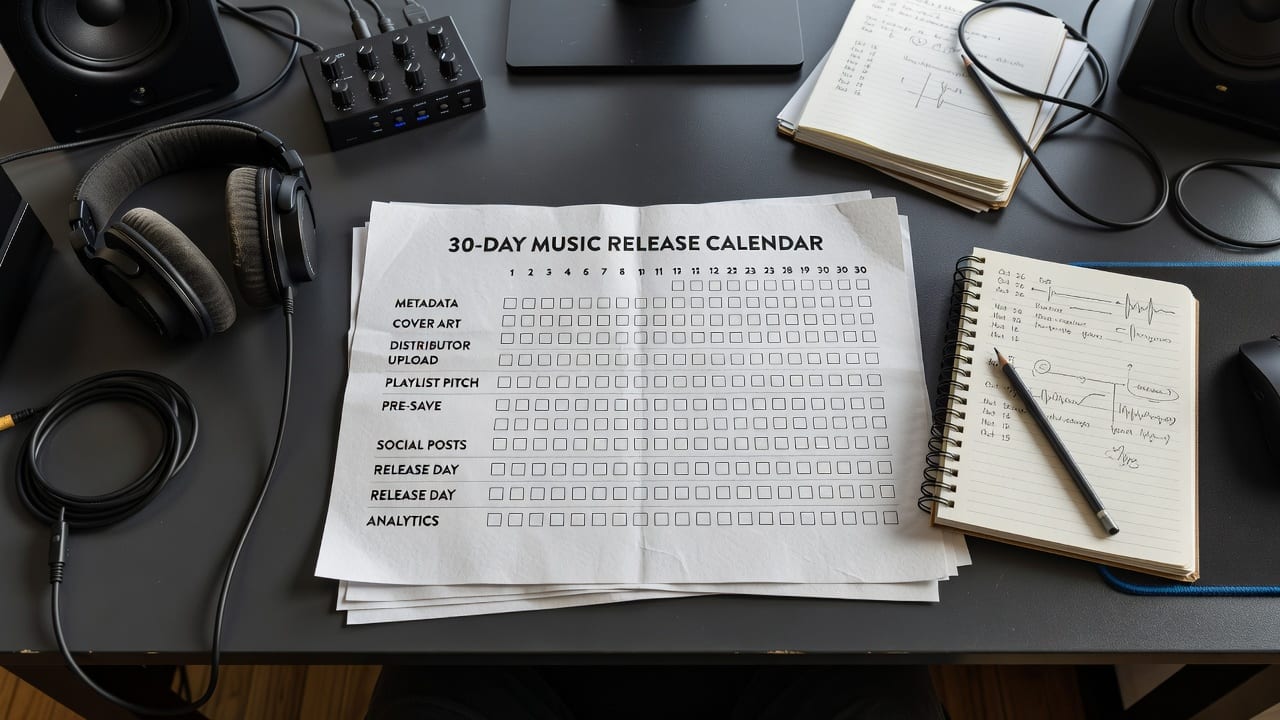
A music release strategy is a coordinated timeline of promotional, technical, and pitching activities designed to maximize algorithmic and editorial reach. It transforms a simple upload into a structured campaign, ensuring proper metadata, playlist pitching, and sustained audience engagement for independent artists.
What Constitutes a Modern Music Release Strategy?
A music release strategy is the architectural blueprint that dictates how a song transitions from a private audio file to a publicly consumed asset. For independent artists, it represents the critical difference between a track that triggers streaming algorithms and one that languishes in obscurity. At its core, this strategy is a sequence of highly coordinated events spanning technical distribution, metadata optimization, editorial pitching, and audience activation.
The concept is often misunderstood as merely the act of uploading a song to a distributor like DistroKid or TuneCore and announcing it on social media. In reality, a robust approach relies on a four-phase music marketing framework: Foundation & Brand Identity, Tease & Engage, Release Week, and Post-Release. Each phase demands specific deliverables, from high-resolution cover art and accurate ISRC codes to short-form video assets and pre-save campaigns.
Negative space is equally important when defining this concept. A release strategy is not "drop culture." While megastars like Beyoncé or Drake can release surprise albums and instantly dominate charts due to their massive existing market share, independent artists lack the baseline algorithmic weight to survive a surprise drop. For new artists, the strategy is the engine that generates the necessary momentum to force digital service providers (DSPs) to pay attention.
Why Independent Artists Must Abandon the 'Upload and Pray' Method
The necessity of a structured release plan stems directly from the mathematical realities of the modern streaming ecosystem. As of 2026, DSPs ingest over 140,000 new tracks every single day. Human curators cannot possibly listen to this volume of music. Instead, platforms rely on complex machine learning algorithms to decide which tracks get pushed to algorithmic playlists like Discover Weekly, Release Radar, and Radio.
These algorithms require data to make decisions. When an artist simply uploads a track without a pre-release campaign, the algorithm has zero context regarding who wants to hear the song, what genre it belongs to, or what mood it evokes. Understanding why your release strategy is failing usually points back to this lack of data-driven planning. Without pre-saves, early profile visits, and initial engagement spikes, the algorithm categorizes the track as low-priority.
A formalized strategy solves the "cold start" problem.
When to Execute: The 4-Week Editorial Pitch Rule
Timing is the most rigid dimension of a music release strategy. The entire campaign hinges on a specific countdown, anchored by the industry-standard 4-week rule for editorial pitching. To be considered for major editorial playlists on platforms like Spotify, Amazon Music, and Apple Music, an unreleased track must be pitched through their respective artist portals at least 28 days before the release date.
Pitching four weeks out serves two critical functions. First, it provides human editors with adequate lead time to review the track, assess its metadata, and place it in appropriate genre or mood playlists. Second, and arguably more important for independent artists, pitching an unreleased track guarantees its placement on the Release Radar playlists of every user who follows the artist. Missing this window forfeits the most reliable source of first-week streams.
Platforms like PitchPlus are specifically designed to support this pre-release planning phase, offering Editorial Pitch timing alerts and metadata tools to ensure artists never miss this critical window. The timeline dictates that the master audio and artwork must be submitted to the distributor at least five to six weeks prior to release, allowing one to two weeks for ingestion before the 4-week pitch window even opens.
How to Build and Execute a 30-Day Launch Calendar
Mechanically, a release strategy is executed through a daily content and action schedule. A 30-day launch calendar template transforms abstract marketing goals into concrete daily tasks. This calendar bridges the gap between the technical backend (pitching, metadata) and the public-facing frontend (social media, community building).
1. Day -30: Announce and launch pre-saves
Begin with the official announcement and the launch of a pre-save campaign.
2. Days -29 to -1: Deploy short-form content
Deploy a steady stream of short-form content across TikTok, Instagram Reels, and YouTube Shorts that tells the story behind the track, showcases the production process, or taps into relevant cultural trends.
3. Day 0: Focus on consumption and sharing
Shift focus from pre-saves to immediate consumption and sharing.
4. Days +1 to +30: Sustain momentum with data
Analyze early listener data, identify which platforms are driving the most traffic, and double down on successful content formats.
Release Day (Day 0) shifts the focus from pre-saves to immediate consumption and sharing. However, the strategy does not end there. Days +1 through +30 are dedicated to sustaining momentum. This involves analyzing early listener data, identifying which platforms are driving the most traffic, and doubling down on successful content formats. Learning how to build a data-driven music release strategy ensures that post-release marketing is guided by actual audience behavior rather than guesswork.
Who Benefits Most from Strategic Pre-Release Planning?
While established artists have teams of label managers and publicists to handle logistics, the primary beneficiaries of a rigorous release strategy are new and independent artists planning their first major releases. For these creators, the initial releases set the trajectory for their entire catalog. A well-executed strategy establishes a professional baseline, signaling to algorithms, curators, and potential fans that the artist is a serious entity.
Independent artists must act as their own marketing departments. Utilizing tools like PitchPlus for metadata management and calendar organization allows solo musicians to punch above their weight class. By adhering to the independent artist's guide to music marketing, creators can systematically build a loyal fanbase rather than relying on viral luck.
Artist managers and independent record labels rely heavily on these structured frameworks to manage multiple artists simultaneously. A standardized 30-day calendar and strict adherence to the 4-week pitching rule allow small teams to scale their operations, ensuring that no release falls through the cracks due to administrative oversight.
Frequently Asked Questions
What is the 4-week rule in music releases?
The 4-week rule refers to the industry standard of submitting unreleased music to streaming platforms' editorial teams (like Spotify for Artists) exactly 28 days before the release date. This lead time gives human curators enough time to review the track for playlist consideration and guarantees the song will appear on the Release Radar of the artist's followers.
Why do I need a 30-day content calendar for a single song?
A 30-day calendar ensures sustained momentum rather than a single spike in interest. It organizes the pre-release teasing phase, the release day activation, and the post-release follow-up. This consistent content generation feeds social media algorithms, driving continuous traffic to the streaming platforms and signaling high engagement to DSP algorithms.
Can I release music without a strategy?
While you can technically upload music at any time, doing so without a strategy usually results in minimal streams. Without pre-saves, editorial pitching, and a coordinated marketing push, streaming algorithms have no data to suggest your track is worth pushing to new listeners, causing it to get lost among the 140,000+ daily uploads.
How do metadata tools help my release strategy?
Metadata tools ensure that all the backend information attached to your audio file—such as genre tags, mood indicators, songwriter credits, and ISRC codes—is perfectly accurate. Clean metadata is crucial because it helps streaming algorithms categorize your music correctly, increasing the chances of it being recommended to the right target audience.
Reading is the easy part.
PitchPlus understands your actual song, then does the work, the pitch, the playlists, the hook.
Get your Spotify editorial pitch written
The pitch plus the genre and mood metadata Spotify routes on, written from your actual song. Not a 500 character box you fill in blind.
Match your song to the right Spotify playlists
Every playlist match scored against what your song actually is, then ranked by fit.
Find your song's viral hook
The best 30 seconds of your song for Reels and TikTok, found automatically.