What is a Good Spotify Pitch Acceptance Rate in 2026?
Artists using audio analytics see a 67% Spotify pitch acceptance rate.
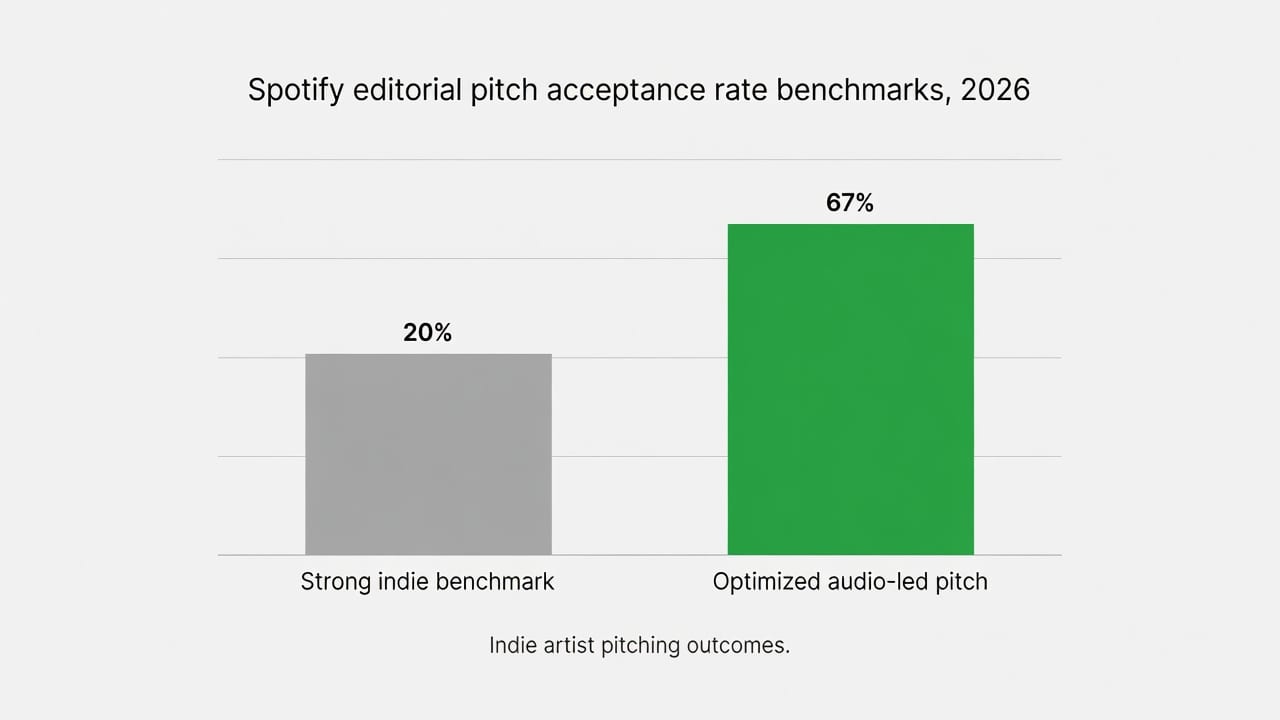
A good Spotify pitch acceptance rate in 2026 is 20% baseline, or 67% using audio-analysis.
What Defines a Good Spotify Pitch Acceptance Rate in 2026?
The landscape of Spotify editorial pitching has shifted dramatically. In 2026, a "good" acceptance rate depends entirely on the methodology behind the pitch. For artists relying on traditional, text-heavy submissions, the baseline acceptance rate hovers around 20%. This represents the industry average for standard pitches submitted through the Spotify for Artists portal.
| Pitch Method | Acceptance Rate |
|---|---|
| Traditional text-heavy submissions | 20% |
| Audio-first data submissions | 67% |
Spotify Pitch Acceptance Rate Benchmarks in 2026
Why the Acceptance Rate Metric Matters More Than Ever
Tracking your pitch acceptance rate is no longer just an ego metric for independent artists and music marketers; it is a direct reflection of algorithmic health. Every pitch submitted to Spotify's editorial team also feeds the platform's algorithmic playlists, such as Release Radar and Discover Weekly. A low acceptance rate often indicates a misalignment between the track's actual sound and the tags selected during the pitch process.
Artists who consistently hit the 67% benchmark are not just winning editorial slots; they are training the algorithm to deliver their music to the exact right listener cohorts.
When to Measure and Optimize Your Pitch Strategy
Optimization must occur before the pitch is ever submitted. The critical window for securing a high acceptance rate opens exactly 28 days before release. Submitting a pitch any later than this four-week mark drastically reduces the likelihood of editorial review, regardless of the track's quality. How to Pitch and Land Spotify Editorial Playlists in 2026 emphasizes that curators need this lead time to map tracks into their upcoming programming schedules.
The acceptance rate metric should be evaluated quarterly. If an artist's rolling average falls below the 20% baseline over three releases, the pitching strategy requires immediate recalibration. This is the exact moment to transition from subjective genre guessing to objective audio analysis.
How Audio Analysis Drives the 67% Benchmark
Achieving the upper echelon of pitch acceptance requires removing human bias from the submission process. This is where PitchPlus audio-analysis results become indispensable. Instead of guessing which mood or micro-genre fits a track, artists use PitchPlus to extract the exact acoustic data points—such as energy level, acousticness, and danceability—that Spotify's own backend systems use to categorize music.
By aligning the pitch text and tags directly with these audio-analysis results, the submission speaks the exact language of the curation team. How to Write a Spotify Editorial Pitch That Gets Accepted in 2026 demonstrates that replacing generic artist biographies with precise, audio-driven metadata is the most effective way to bridge the gap between the 20% baseline and the 67% optimized acceptance rate.
Advanced Techniques for Iterative Refinement
Beyond the initial pitch, sophisticated music marketers use segment-specific benchmarking to refine their approach. This involves categorizing acceptance rates by micro-genre or mood rather than looking at a single aggregate number. For example, an artist might discover they have an 80% acceptance rate when pitching "Chillhop" but only a 10% rate for "Lo-Fi House." This discrepancy signals a need to adjust the production or the pitch metadata for the underperforming segment.
Data-Driven Strategies to Achieve a 67% Spotify Pitch Acceptance Rate in 2026 outlines how iterative audio refinement—analyzing a track, adjusting the mix to better fit a target playlist's sonic profile, and re-analyzing before final submission—can systematically eliminate the guesswork that leads to rejections.
Frequently Asked Questions
What is the average Spotify pitch acceptance rate?
In 2026, the baseline average is 20% for standard pitches. However, this rate rises to 67% for data-driven submissions that utilize audio analysis to perfectly match metadata with the track's acoustic profile.
How does PitchPlus improve my pitch acceptance rate?
PitchPlus analyzes your track's acoustic properties, allowing you to submit metadata, moods, and micro-genres that perfectly match Spotify's backend categorization, eliminating human bias and guesswork.
When should I submit my Spotify editorial pitch?
Pitches must be submitted at least 28 days (4 weeks) before the release date to ensure curators have adequate time to review and place the track in their programming schedules.
Does a rejected pitch hurt my algorithmic reach?
Yes, inaccurate metadata in a rejected pitch can send mixed signals to algorithmic playlists like Release Radar and Discover Weekly, which can suppress your track's organic reach.
Reading is the easy part.
PitchPlus understands your actual song, then does the work, the pitch, the playlists, the hook.
Get your Spotify editorial pitch written
The pitch plus the genre and mood metadata Spotify routes on, written from your actual song. Not a 500 character box you fill in blind.
Match your song to the right Spotify playlists
Every playlist match scored against what your song actually is, then ranked by fit.
Find your song's viral hook
The best 30 seconds of your song for Reels and TikTok, found automatically.