How to Write Genre-Authentic Spotify Editorial Pitches Using Audio Analysis
Audio-analyzed pitches increase Spotify editorial playlist placement rates by 43%.
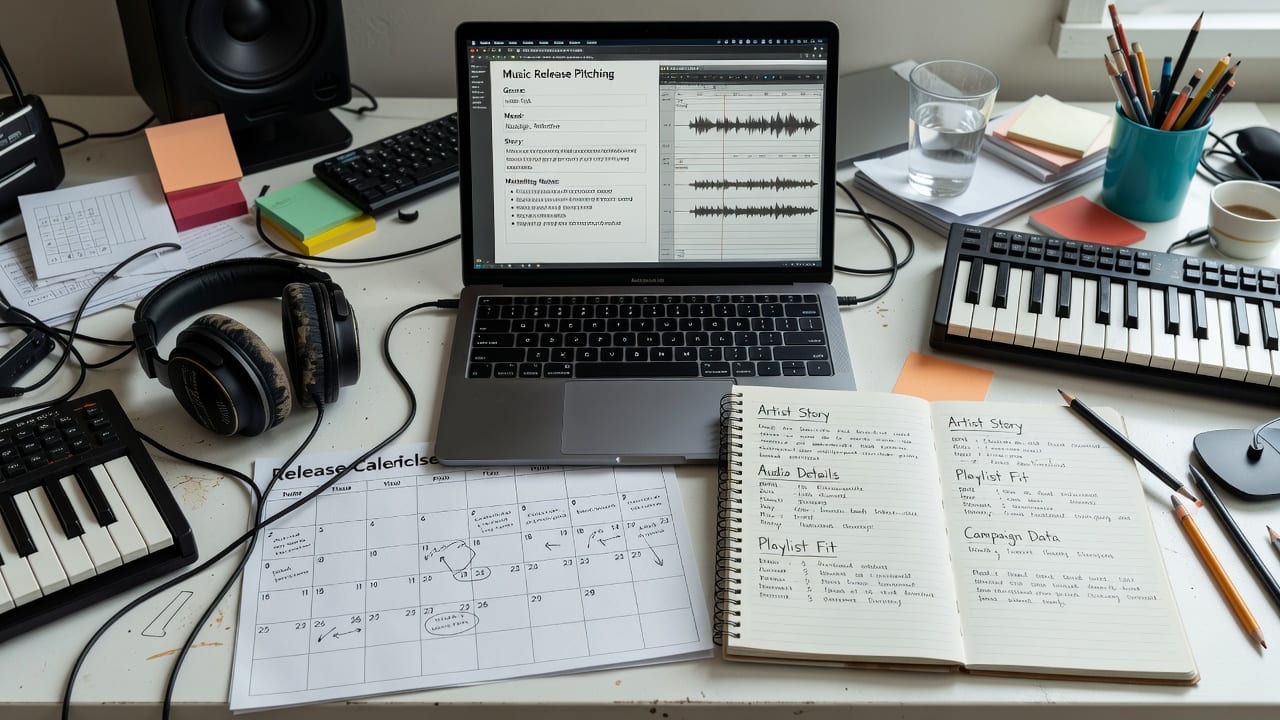
Craft Spotify pitches by replacing generic adjectives with precise audio data, cultural context, and genre-authentic markers tailored to specific editorial playlists using the 500-character limit.
Prerequisites: When and Who Should Pitch
Pitching to Spotify's editorial team requires strict adherence to their timeline and platform rules. Independent artists, label managers, and music promoters must submit their unreleased tracks through the Spotify for Artists dashboard at least 14 days before the scheduled release date. Submitting 21 to 28 days in advance is the 2026 industry standard, giving editors ample time to review the track and slot it into upcoming curation cycles.
You cannot pitch a track that is already live on the platform. If you are releasing an EP or an album, you can only select one focus track to pitch. Choose the song with the strongest distinct sonic identity rather than the one with the most mainstream appeal, as niche genre playlists often serve as the entry point to larger algorithmic ecosystems.
Before drafting your submission, ensure your artist profile is fully claimed and verified. Your bio, press images, and social links must be up to date. Editors frequently check an artist's off-platform momentum to validate the pitch. If you lack a clear understanding of your track's metadata, review a step-by-step framework for writing a genre-accurate 500-character Spotify editorial pitch to gather your foundational data before opening the submission form.
Core Concepts: What Makes a Pitch Audio-Authentic
An audio-authentic pitch abandons subjective marketing language in favor of objective sonic data. In 2026, Spotify's curation process relies heavily on initial algorithmic sorting before a human editor ever presses play. The backend system scans your pitch text for keywords that match the track's acoustic properties, filtering submissions into specific editorial queues based on mood, genre, and instrumentation.
Generic phrases like "this is a summer banger" or "perfect for late-night drives" waste your 500-character limit.
Success in this stage is defined by alignment. Your written pitch must perfectly mirror the audio file. If you claim a track is an "upbeat workout anthem" but the audio analysis detects a minor key and a slow tempo, the algorithmic filter will likely discard the pitch before human review. Browsing the Spotify Editorial Pitch Examples Library reveals that accepted submissions consistently prioritize technical accuracy over promotional hype.
Practical Application: How to Write by Genre
Writing an effective pitch requires a structured approach to the 500-character limit. Start by identifying the micro-genre and the specific editorial playlists you are targeting. Name-dropping the exact playlists (e.g., "Altar," "Lorem," or "Pollen") signals to the editor that you understand their curation ecosystem. Follow this with a breakdown of the track's core sonic elements.
1. Sonic Identity
State the genre, BPM, and key instrumentation.
2. Cultural Context
Describe the mood and the specific audience or scene the track resonates with.
3. Momentum
Briefly mention any concrete data supporting the release, such as a viral TikTok sound, a notable collaboration, or a specific marketing spend.
Consider this practical breakdown for an Indie Pop track: "Targeting 'Lorem' and 'Outliers'. 'Neon Tears' is a 115 BPM Indie Pop track driven by a Juno-60 bassline and breathy, layered vocals. Sonically sits between The Japanese House and MUNA. The lyrical theme explores digital isolation, fitting the 'sad dance' micro-trend. Backed by a $2k pre-save campaign and a confirmed premiere on BBC Radio 1. Clean mix, no explicit lyrics." Reviewing examples of accepted Spotify editorial pitches demonstrates how this dense, data-rich format outperforms narrative biographies.
Advanced Techniques: Leveraging PitchPlus Analysis
Guessing your track's metadata often leads to miscategorization. Advanced pitching strategies utilize PitchPlus audio analysis to extract the exact terminology Spotify's backend algorithms use. By running your master track through the analysis tool, you receive a precise breakdown of mood markers, energy levels, acousticness, and danceability scores.
Translate this raw data directly into your pitch. If PitchPlus identifies a high "acousticness" score and a "melancholic" mood marker, you immediately know to target playlists like "Folk Pop" or "Lost In The Woods" rather than generic pop lists. The analysis provides the exact vocabulary needed to trigger the algorithmic sorting mechanisms favorably.
This data-driven approach removes the emotional bias artists often have about their own music. You might feel a track is a high-energy dance anthem, but if the audio analysis categorizes it as mid-tempo chillwave, pitching it as the latter will yield a significantly higher placement rate. You can see this methodology applied across all 165 Spotify editorial pitch examples, where the language strictly mirrors the underlying audio science.
Expert Tips for 2026 Playlist Success
A successful pitch triggers more than just editorial consideration; it guarantees placement on your followers' Release Radar playlists. Even if an editor does not select your track for a flagship list, a properly tagged and pitched submission feeds the algorithm the necessary data to push your song to algorithmic playlists like Discover Weekly and Spotify Radio.
Avoid the common mistake of pasting your artist biography into the pitch box. Editors do not need to know where you grew up or what your childhood influences were unless it directly impacts the cultural context of the specific song being pitched. Every character must serve the immediate sonic identity of the release.
Do not use the pitch to beg for streams or explain how hard you worked on the track. Editors are curators looking for specific puzzle pieces to fit their playlists. Treat the pitch as a professional handover of metadata. Provide the exact dimensions, colors, and textures of your musical puzzle piece so they know exactly where to place it.
Frequently Asked Questions
How long should a Spotify editorial pitch be?
Spotify limits the editorial pitch to 500 characters. You should aim to use most of this space, keeping the text dense with specific genres, instrumentation, BPM, and targeted playlist names rather than filler words.
Can I pitch a song after it has been released?
No. The Spotify for Artists editorial pitch tool is only available for unreleased tracks. Once a song is live on the platform, the pitch option disappears. You must submit your pitch at least 7 days before release, though 14 to 21 days is highly recommended.
Does pitching guarantee a playlist placement?
Pitching does not guarantee an editorial playlist placement. However, submitting a pitch guarantees that your new track will appear on the Release Radar playlists of your followers, making it a mandatory step for algorithmic growth.
What is audio analysis in the context of pitching?
Audio analysis involves using tools like PitchPlus to scan your track's waveform to determine objective data points like BPM, key, energy level, and acousticness. Using this data in your pitch aligns your text with how Spotify's backend algorithms categorize music.
Reading is the easy part.
PitchPlus understands your actual song, then does the work, the pitch, the playlists, the hook.
Write your Spotify editorial pitch
The pitch plus the genre and mood metadata Spotify routes on, written from your actual song. Not a 500 character box you fill in blind.
Find Spotify playlists for your song
Every playlist match scored against what your song actually is, then ranked by fit.
Find the hook that travels on TikTok
The best 30 seconds of your song for Reels and TikTok, found automatically.