How to Write a Spotify Editorial Pitch That Curators Actually Read
Audio-analyzed pitches bypass generic AI filters, increasing editorial consideration rates.
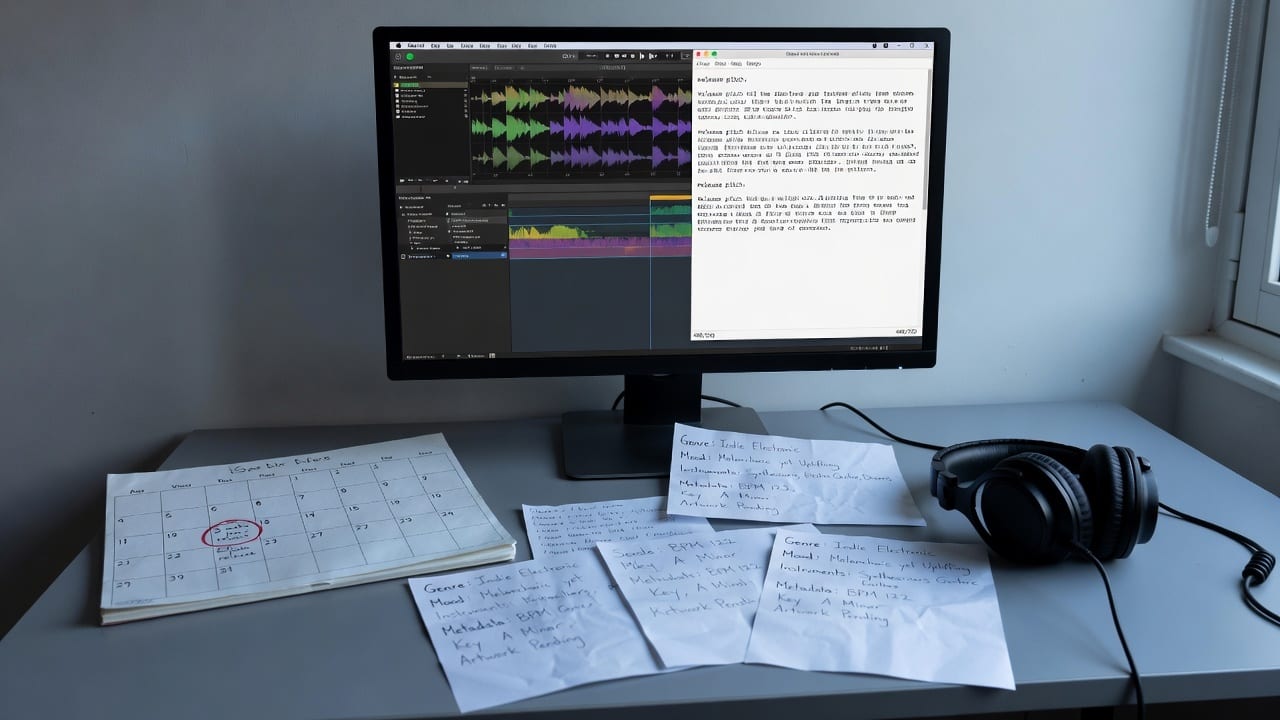
Use audio-analysis tools to generate sonic-based, 500-character pitches 2-4 weeks before your release date.
Prerequisites: Timing and Audio Readiness
Before drafting a single word of your pitch, independent DIY artists and managers must align their release schedule with Spotify's editorial workflow. The pre-release demand pattern dictates a strict 2-4 week window. Submitting a track less than 14 days before release virtually guarantees it will bypass editorial review and only trigger algorithmic Release Radar placements for existing followers.
You need a finalized, mastered WAV or MP3 file ready for distribution. Curators review the actual audio file attached to the pitch. If your master changes after submission, the pitch becomes invalid. This timing becomes especially critical during the Q4 seasonal pattern, when major-label holiday releases crowd the schedule and independent artists face heightened competition for limited playlist slots.
Understanding How to Pitch and Land Spotify Editorial Playlists in 2026 requires recognizing that timing is a hard prerequisite. If you miss the window, no amount of persuasive writing will force a manual review. Artists should finalize their distribution upload at least 21 days out, leaving ample time to craft the pitch text without rushing the submission process.
Core Concepts: Why Audio Analysis Beats Text LLMs
| Method | Cost | Core Problem |
|---|---|---|
| Agency write-up | $120-$250 | Generic text that ignores sonic metadata |
| General LLM (ChatGPT) | Free | Guesses sound from text prompts and produces buzzword templates |
| Audio-analysis tool | Varies | Extracts verified hooks, genres, and structure directly from the file |
Pitch-writing approaches compared
Curators easily spot these generic templates, leading to immediate rejections.
Audio-first alternatives, such as PitchPlus Editorial Pitch Products, solve this by actually listening to the track. By analyzing the audio file directly, these tools extract verified hooks, primary and secondary genres, and structural elements. The resulting pitch reflects the true sonic identity of the music, providing curators with the exact data points they use to filter tracks into specific editorial buckets.
Practical Application: Step-by-Step Pitch Generation
Executing a successful pitch requires translating your track's sonic data into Spotify's strict 500-character limit. Start by uploading your unreleased master file to an audio-analysis engine. The tool will scan the waveform to identify the primary genre, secondary sub-genres, and dominant instrumentation. This step replaces the subjective guesswork of trying to classify your own music.
Next, review the generated pitch options. A strong audio-analysis tool will provide multiple variations. Select the version that best highlights the track's unique sonic identifiers. For example, a Spotify Editorial Pitch for Alternative Music That Gets Playlisted will focus heavily on specific guitar tones, rhythmic structures, and mood tags rather than lyrical themes.
Finally, paste the optimized 500-character text into the Spotify for Artists dashboard. Ensure you manually select the exact mood and genre tags that match the audio analysis. Do not contradict your pitch text with conflicting dropdown selections. The alignment between your written pitch, your selected tags, and the actual audio file signals professionalism and accuracy to the editorial team.
Advanced Techniques: Metadata and Momentum
A complete release strategy extends beyond the 500-character pitch box. Curators look for external momentum to justify playlist placement. Utilizing a Metadata & Momentum Kit allows artists to extract the "Star Moment"—the most engaging 30-second segment of the track. This verified hook should be used for your Spotify Canvas, TikTok campaigns, and Instagram Reels in the weeks leading up to release.
Aligning your visual content with the exact audio segment identified by machine listening ensures maximum engagement on social platforms. When a Spotify curator reviews your pitch, they often check your social presence. Seeing high engagement on the exact hook mentioned in your pitch validates your submission.
Additionally, ensure your distributor receives the exact same sonic metadata used in your editorial pitch. Consistency across the entire supply chain—from the distributor's database to Spotify's backend—strengthens the algorithmic association of your track with your target genres, improving your chances of algorithmic playlisting even if editorial placement falls through.
Expert Tips: Post-Release Routing
Even with a perfect audio-analyzed pitch, editorial placement is never guaranteed. Professional artist managers plan for the post-release demand pattern immediately. Once the track is live, the strategy shifts from pre-release editorial pitching to post-release independent curator matching.
Instead of blindly spending budget on submission platforms, use a Smart Playlist Finder to score and rank active playlists based on genre fit and freshness. This intelligence layer sits upstream of execution platforms like SubmitHub and Groover. By filtering out dead or inactive playlists first, you preserve your marketing budget for curators who actively update their lists and match your exact sonic profile.
To pitch your song to Spotify playlists, where it actually fits, you must treat the release cycle as a continuous workflow. The same audio analysis that generated your pre-release editorial pitch should dictate which independent curators you target on release day, ensuring a cohesive, data-driven campaign from start to finish.
Frequently Asked Questions
Does Spotify penalize artists for using AI to write editorial pitches?
Spotify does not penalize the use of AI tools for drafting text, provided the pitch accurately describes the music. However, curators frequently ignore generic, buzzword-heavy pitches generated by text-only LLMs like ChatGPT. Using audio-analysis tools like PitchPlus ensures the AI output is grounded in actual sonic data, which curators prefer.
How far in advance should I submit my Spotify editorial pitch?
You must submit your pitch at least 2 to 4 weeks before your scheduled release date. Submitting closer than 14 days significantly reduces the chances of an editorial review and may only guarantee algorithmic placement on your followers' Release Radar.
What is the character limit for a Spotify for Artists pitch?
The Spotify for Artists pitch box has a strict limit of 500 characters (not words). This requires extreme conciseness, making it critical to focus on instrumentation, mood, and genre rather than lengthy backstories or generic marketing claims.
Why is audio analysis better than ChatGPT for music pitching?
ChatGPT generates text based on user prompts, often resulting in generic templates that guess at a song's sound. Audio analysis tools actually "listen" to the WAV or MP3 file, extracting verified sonic metadata (tempo, dominant instruments, exact sub-genres) to create a highly accurate, custom pitch that meets curator expectations.
Reading is the easy part.
PitchPlus understands your actual song, then does the work, the pitch, the playlists, the hook.
Build your Spotify pitch and metadata
The pitch plus the genre and mood metadata Spotify routes on, written from your actual song. Not a 500 character box you fill in blind.
Find the Spotify playlists you fit
Every playlist match scored against what your song actually is, then ranked by fit.
Find your best 30 seconds for Reels
The best 30 seconds of your song for Reels and TikTok, found automatically.