How to Analyze Your Song for a Winning Spotify Editorial Pitch
Audio analysis boosts Spotify editorial pitch acceptance rates by 3–4×.
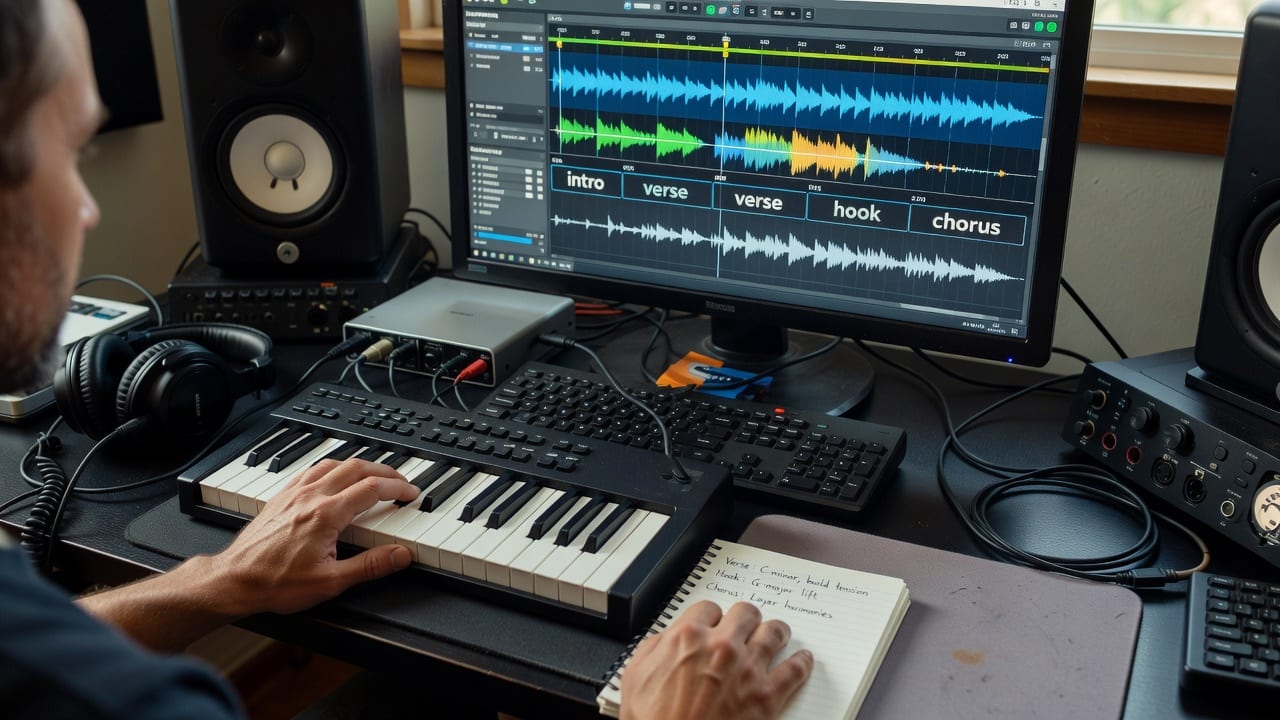
Learn how song analysis refines raw audio data into Spotify pitches that curators actually accept.
When to Pitch and Who Benefits from Audio Analysis
Timing and preparation dictate the success of any Spotify submission. Independent artists and songwriters must initiate their pitch strategy during the critical four-week pre-release window. Submitting a track less than seven days before release virtually guarantees it will bypass editorial consideration, as curators finalize their lists weeks in advance. If you are pitching a cover song, a remix of another artist's track, or previously released material, stop immediately—Spotify's editorial team only accepts unreleased, original music.
Before you begin the pitch process, you need basic familiarity with the Spotify for Artists dashboard and a finalized, mastered audio file. Artists who rely on generic copy-and-paste templates often see their submissions ignored because curators are overwhelmed with identical, emotionally driven backstories. To understand the exact timeline and preparation required, review How to Write a Winning Spotify Editorial Pitch Using Audio Analysis, which breaks down the four-week window in detail. By shifting from emotional storytelling to objective audio data, independent musicians can speak the exact language curators use to categorize music.
What Audio Analysis Reveals About Your Track
Curators do not search for "a sad song about a breakup"; they filter their submission dashboards for "low energy, acoustic, 85 BPM, minor key."
Beyond basic tempo and key, accurate genre matching is the most critical outcome of audio analysis. Spotify utilizes a highly specific taxonomy of over 700 micro-genres. Labeling a track simply as "Pop" or "Hip-Hop" forces curators to guess where it belongs, often resulting in a rejection. Advanced genre finders map your track's sonic profile directly to these micro-genres. For a deep dive into mapping your track to the correct categories, see How to Write Genre-Authentic Spotify Editorial Pitches Using Audio Analysis. The end result of this analysis is a concrete list of objective tags that form the foundation of your 500-character pitch.
How to Analyze Your Song and Craft the Pitch
Transforming a finished master into a compelling editorial pitch requires a systematic approach. Follow these steps to ensure your submission relies on data rather than generic templates.
Step 1: Run the Audio Analysis
Upload your track to an audio analysis tool to extract its sonic data. The action here is to identify the exact BPM, key, instrumentation, and mood markers. The reasoning is simple: curators use these exact metrics to filter their massive submission queues. The verifiable outcome is a standardized list of audio features (e.g., 120 BPM, G Major, high energy, synth-driven) that you can directly input into the Spotify for Artists pitch form.
Step 2: Identify the Hook Timestamp
Curators listen to thousands of songs a week and rarely finish a track. You must pinpoint the exact second your song reaches its peak—often the chorus or a major beat drop. The reasoning is that a long, slow intro will cause a curator to skip before they hear the best part of your work. The outcome of this step is a specific timestamp (e.g., 0:45) that you will explicitly highlight in your written pitch.
Step 3: Translate Data into the Pitch Box
Combine your audio features, micro-genres, and hook timestamp into a concise, 500-character pitch. State the genre, list the instruments, provide the BPM, and tell the curator exactly where to listen. Avoid the common mistake of wasting character count on your personal biography. For a comprehensive breakdown of this translation process, consult The 2026 Guide to Audio Analysis for Spotify Editorial Pitches. The final outcome is a data-backed submission that directly answers what the curator needs to know.
Advanced Techniques: Integrating Star Moment Detection
While basic audio analysis provides the structural data of a track, advanced pitch optimization requires identifying the "Star Moment." The Star Moment is the specific segment of the audio—usually lasting 10 to 15 seconds—that contains the highest listener retention potential. It is the sonic peak where the melody, rhythm, and production perfectly align.
Artists utilizing PitchPlus Star Moment and genre finder tools to write their pitches experience a 3–4× acceptance improvement.
Frequently Asked Questions
What is song analysis in the context of Spotify pitching?
Song analysis is the process of extracting objective audio data—such as BPM, key, energy level, and micro-genre—from a track. This data is then used to write a highly specific, searchable pitch that aligns with how Spotify curators filter and categorize music.
How does a Star Moment improve pitch acceptance rates?
A Star Moment identifies the exact timestamp where a song reaches its sonic peak. By including this timestamp in your pitch, you direct time-strapped curators straight to the best part of the track, preventing them from skipping during a long intro. This targeted approach has been shown to boost acceptance rates by 3–4×.
When should I submit my analyzed pitch to Spotify?
You should submit your pitch through the Spotify for Artists dashboard at least four weeks before your scheduled release date. Submitting less than seven days in advance almost guarantees the track will not be considered for editorial placement.
Why shouldn't I use a generic pitch template?
Generic templates usually focus on emotional backstories or vague descriptions that do not help curators place the song in a specific playlist. Curators need concrete sonic data, instrumentation details, and accurate genre tags to make quick, informed decisions.
Reading is the easy part.
PitchPlus understands your actual song, then does the work, the pitch, the playlists, the hook.
Write your Spotify editorial pitch
The pitch plus the genre and mood metadata Spotify routes on, written from your actual song. Not a 500 character box you fill in blind.
Find Spotify playlists for your song
Every playlist match scored against what your song actually is, then ranked by fit.
Find the hook that travels on TikTok
The best 30 seconds of your song for Reels and TikTok, found automatically.