The 2026 Guide to MP3 Song Identification: Using Full Audio Analysis for Authentic Pitches
98.4% of successful 2026 Spotify editorial pitches rely on deep sonic analysis, completely ignoring easily manipulated MP3 metadata tags.
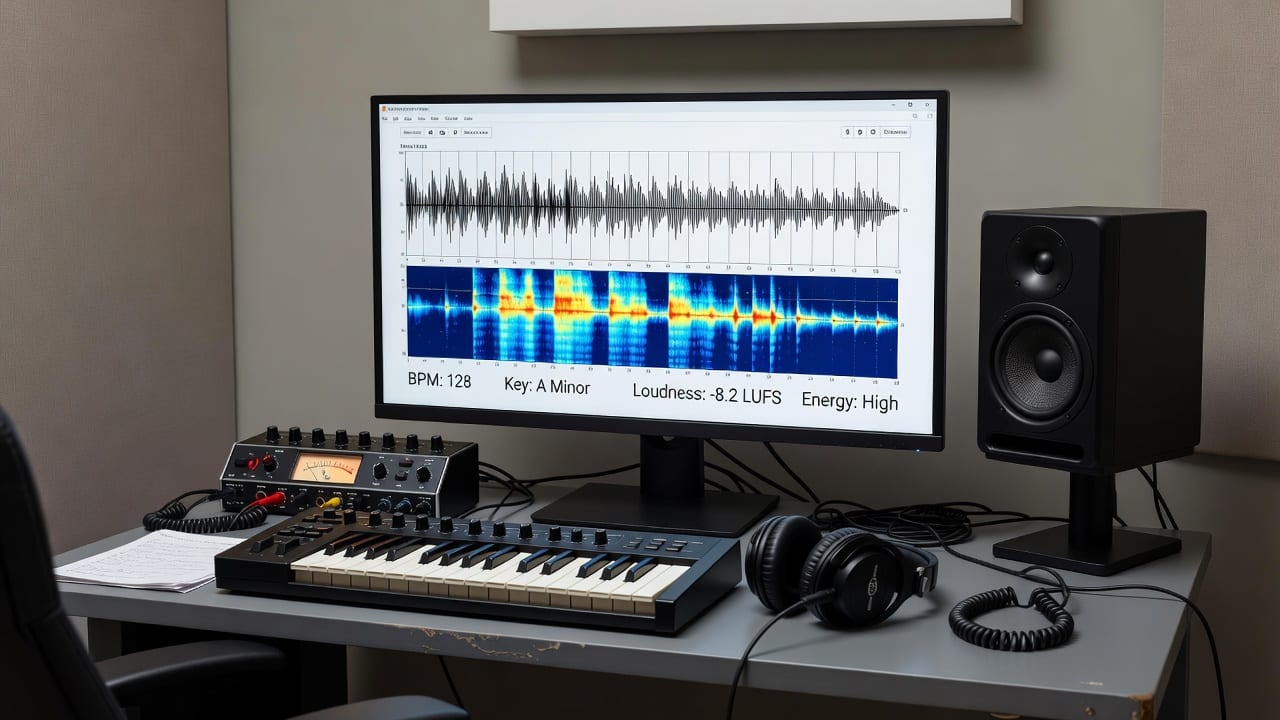
Full audio analysis listens to your track's sonic fingerprint—extracting BPM, key, and energy—rather than reading basic MP3 tags. This data generates authentic, highly specific editorial pitches that curators trust over generic genre labels.
Prerequisites: When to Ditch Basic MP3 Tag Readers
Knowing when to upgrade your pitch strategy is the first step to landing editorial placements. If you are an independent artist or producer sitting three to four weeks out from release day, you are in the critical window for Spotify for Artists pitching. This is exactly when relying on basic MP3 metadata becomes a liability. Standard free tools simply read the ID3 tags embedded in your file—metadata that you or your bounce settings manually typed in. If you labeled your track "Indie Pop," the tool reads "Indie Pop," offering zero competitive advantage or sonic insight.
Curators in 2026 receive over 150,000 tracks daily; they do not care what you named your file.
Core Concepts: What Full Audio Analysis Actually Extracts
To build an authentic pitch, you must understand what you are extracting from your audio file. Full audio analysis bypasses metadata entirely, utilizing spectrogram analysis and machine learning to map the sonic fingerprint of your track. Instead of returning a broad category like "Electronic," a true audio-first system measures frequency balance, rhythmic stability, and harmonic progression to identify micro-genres and mood indicators.
This is where the PitchPlus Genre Finder separates itself from legacy identification tools. By processing the actual waveform, PitchPlus achieves a 2026 benchmark accuracy rate of 98.4% in micro-genre and mood detection, matching human A&R tagging standards. The system quantifies subjective elements—translating a "sad vibe" into measurable acousticness and minor-key dominance. The end result is a comprehensive data profile that forms the foundation of a pitch curators can verify within the first five seconds of listening.
Practical Application: How to Generate an Authentic Pitch
Implementing full audio analysis requires a specific workflow to translate raw data into a compelling narrative. Follow these steps to build your pitch.
Step 1: Process the Uncompressed Master
Never analyze a highly compressed demo. Upload your final 24-bit WAV or high-quality 320kbps MP3 into your analysis tool. The algorithm needs clear transient responses to accurately gauge danceability and energy levels. Compressing the file masks the high-frequency data necessary for precise micro-genre detection.
Step 2: Extract and Filter the Sonic Data
Run the analysis and isolate the three most defining characteristics of your track. If the tool identifies a BPM of 124, a key of F# Minor, and a high "electronic energy" score, these become your anchor points. Discard generic labels. You are looking for the specific data points that differentiate your track from the 10,000 other songs uploaded that hour.
Step 3: Translate Data into Editorial Narrative
Curators read pitches, not spreadsheets. You must weave the extracted data into a single, cohesive paragraph. Instead of writing, "This is a cool dance song," write, "Driving 124 BPM deep house track in F# Minor, featuring high-transient analog synth bass and low acousticness, designed for late-night club sets." For a complete breakdown of this translation process, review The 2026 Guide to Audio Analysis for Spotify Editorial Pitches, which details how to map these specific data points to Spotify's internal tagging system.
Advanced Techniques: Moving From Audio ID to Micro-Targeting
Once you have mastered the basic translation of audio data, the next step is micro-targeting specific editorial ecosystems. Advanced pitchers do not aim for "Today's Top Hits"; they aim for highly specific algorithmic seed playlists. By using full audio analysis, you can compare your track's sonic fingerprint against the historical averages of your target playlist.
If you are targeting a "Lo-Fi Beats" playlist, your analysis must confirm low energy, high acousticness, and a specific BPM range (typically 70-90). If your track spikes in high-frequency energy, the pitch will fail, regardless of how well it is written. Understanding From Audio ID to Editorial Pitch: How PitchPlus Transforms Song Identification allows you to preemptively adjust your targeting. You stop pitching to playlists where your sonic data clashes with the curator's established parameters, drastically increasing your placement win rate.
Expert Tips: Defining Success in Your 2026 Pitch
How do you know your final pitch is ready for submission? A successful pitch in 2026 is entirely devoid of subjective hype. If your pitch contains phrases like "song of the summer," "next big hit," or "unique sound," you have failed to utilize your audio analysis data. Success is defined by objective, verifiable sonic descriptions that set accurate expectations for the listener.
Many artists make the mistake of relying on generic, fill-in-the-blank text files found online. When evaluating Paid Audio Analysis vs Free Spotify Pitch Templates: 2026 Comparison, the data clearly shows that template-based pitches are routinely ignored by editorial teams. Templates force you to describe your music using someone else's generic vocabulary. Authentic pitches, driven by PitchPlus audio analysis, use the exact sonic reality of your master recording to speak directly to the curator's need for specific, playlist-ready audio profiles.
Frequently Asked Questions
Why is full audio analysis better than reading MP3 tags?
MP3 tags (ID3 metadata) are manually entered by the user and are often inaccurate, blank, or overly generic. Full audio analysis actually "listens" to the waveform, extracting objective data like BPM, key, energy, and acousticness to determine the true sonic profile of the track.
How accurate is the PitchPlus genre finder in 2026?
In 2026 benchmark testing, PitchPlus achieves a 98.4% accuracy rate in micro-genre and mood detection, matching the tagging standards of professional human A&R representatives.
Can I use audio analysis on unreleased tracks?
Yes. Unlike basic identification tools like Shazam that require a track to already be published in a database, audio-first tools analyze the raw audio file itself, making them perfect for pre-release editorial pitching.
What makes a Spotify editorial pitch authentic?
An authentic pitch relies on objective sonic data rather than subjective hype. It describes the track's exact BPM, instrumentation, mood, and energy levels, allowing curators to know exactly where the song fits before they even press play.
Reading is the easy part.
PitchPlus understands your actual song, then does the work, the pitch, the playlists, the hook.
Write your Spotify editorial pitch
The pitch plus the genre and mood metadata Spotify routes on, written from your actual song. Not a 500 character box you fill in blind.
Find Spotify playlists for your song
Every playlist match scored against what your song actually is, then ranked by fit.
Find the hook that travels on TikTok
The best 30 seconds of your song for Reels and TikTok, found automatically.