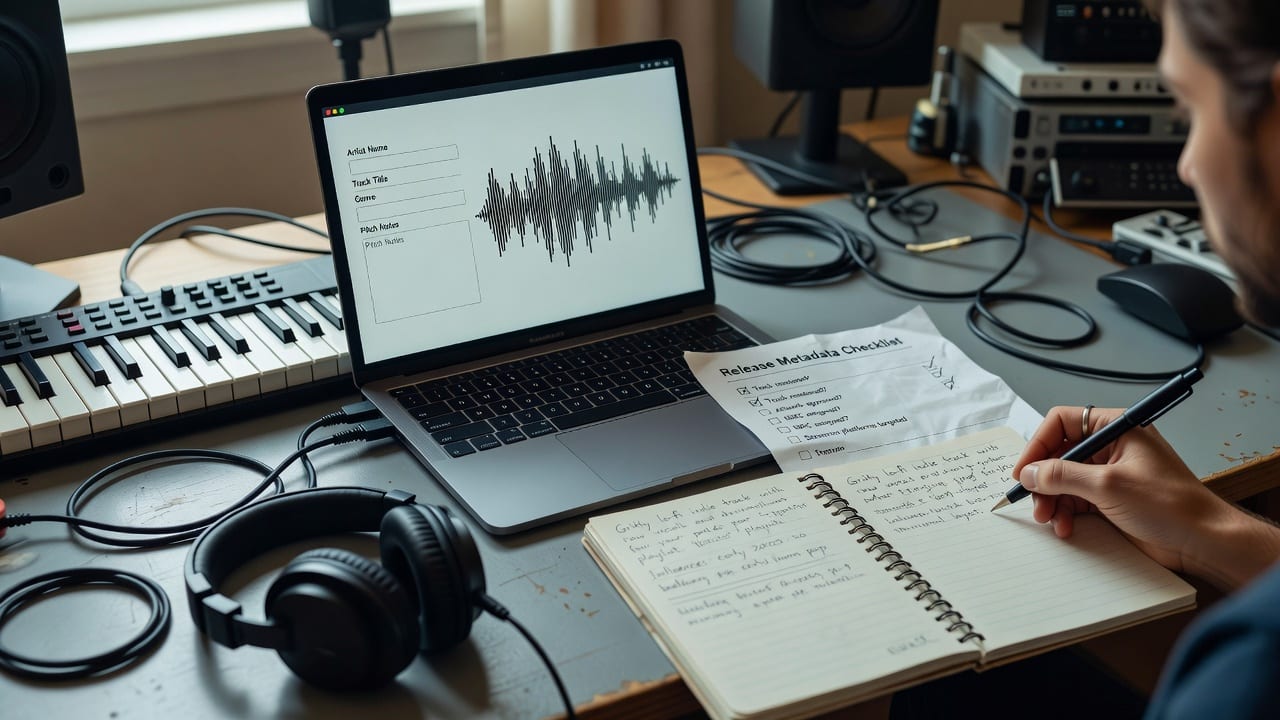
A strong 2026 pitch starts with timing and track-specific metadata.
Quick Answer
To land Spotify editorial playlists in 2026, submit your pitch exactly four weeks before release using audio analysis to define micro-genres, rather than relying on generic text templates.
The 2026 Spotify Editorial Landscape: Why Templates Fail
Spotify receives over 120,000 new track uploads every single day. For pre-release artists, standing out in the Spotify for Artists (S4A) pitching tool requires more than a catchy biography. Curators are overwhelmed, and their primary method for filtering this massive influx of music is through highly specific metadata and sonic tagging.
In recent years, artists flooded the system with generic pitches generated by free AI text tools. These templates follow a predictable, marketing-heavy structure that tells curators nothing about how the song actually sounds. When an editor reads, "This is a summer anthem with great vibes," they immediately move on. To understand how to pitch and land Spotify editorial playlists in 2026, artists must shift their focus from marketing copy to objective sonic data.
Editorial curators search their internal dashboards using micro-genres, BPM, instrumentation, and mood tags. If your pitch does not contain the exact vocabulary that matches their playlist's sonic identity, your track will not surface in their filtered searches, regardless of your social media following.
The Strict 4-Week Timeline: Timing is Everything
The most common mistake independent artists make is pitching their music too close to the release date. While Spotify technically allows pitches up to seven days before release, submitting that late guarantees your track will bypass human editorial review. The golden rule for 2026 is the strict 4-week timeline.
Submitting your pitch exactly 28 days before release serves two critical functions. First, it provides human curators with the necessary lead time to review the track, discuss it in their weekly programming meetings, and slot it into upcoming playlist updates. Second, it guarantees your track will be processed by Spotify's algorithmic systems, ensuring it appears on the Release Radar playlists of all your followers.
1. Finalize and master the track
Complete production, mixing, and mastering.
2. Upload to your distributor
Submit the finished files at least five weeks before release day.
3. Begin the 28-day countdown
Once the unreleased track appears in your S4A dashboard, the official pitch window opens.
Audio Analysis vs. Free AI Tools
Free AI writing tools rely entirely on text prompts. If you ask a standard chatbot to write a pitch, it can only regurgitate the adjectives you provide. This results in subjective, fluffy pitches that fail to capture the technical reality of the music. Audio analysis takes the opposite approach by extracting objective data directly from the audio file.
Modern pitching strategies rely on analyzing the waveform to identify precise BPM, key, harmonic density, instrumentation (e.g., "analog synth bass," "distorted 808s"), and cultural micro-genres. This is why crafting Spotify editorial pitches with audio analysis drastically outperforms text-based generation. Curators need to know if a track fits "Lofi Beats" or "Jazz Vibes," and audio analysis provides the exact terminology required to make that match.
Aspect
Free AI tools
Audio-analysis platforms
Source material
Rewrites your marketing bio
Analyzes your actual master file
Output style
Subjective, fluffy adjectives
Objective sonic data and micro-genres
Curator fit
Often ignored
Matches exact playlist vocabulary
Free AI tools versus audio-analysis platforms
Implementing Genre-Authentic Pitches with PitchPlus
For artists who lack the technical vocabulary to describe their own music objectively, using a dedicated audio-analysis platform bridges the gap between creation and curation. PitchPlus offers specific solutions designed around this exact workflow, ensuring that the pitch submitted to Spotify is entirely genre-authentic.
The PitchPlus Spotify Editorial Pitch (Full Package) handles the entire process, from deep audio analysis to crafting the final submission text, ensuring every micro-genre and mood tag aligns with current editorial playlist criteria. For artists who prefer a more hands-on approach but still need the data-driven edge, the Pitch Only tier provides the optimized pitch text based on the same rigorous audio analysis.
By utilizing these tools, artists can confidently execute the 2026 strategy guide to winning Spotify editorial pitches. The resulting submission is devoid of marketing fluff, focusing entirely on the sonic characteristics, cultural context, and specific playlist targets that curators actually care about.
1. The 28-Day Algorithmic Trigger
Submitting exactly four weeks prior to release guarantees algorithmic processing for Release Radar while providing human curators the necessary lead time for weekly programming meetings.
Upload the final master and artwork to your distributor 35 days before release.
Monitor your Spotify for Artists dashboard daily until the unreleased track appears.
Submit the pitch via S4A exactly 28 days before the release date.
2. Audio-First Metadata Extraction
Curators filter submissions using highly specific sonic tags; extracting objective data from the audio file ensures your pitch matches their internal search vocabulary.
Process your unreleased master file through an audio analysis tool to extract BPM, key, and harmonic data.
Identify 2-3 highly specific micro-genres (e.g., 'Dark Synthpop' instead of just 'Pop').
List the primary analog or digital instruments driving the track's rhythm and melody.
3. The Anti-Template Pitch Structure
Generic marketing templates are instantly recognizable and frequently ignored by editors who need to know how a track sounds, not how it is being promoted.
Dedicate the first 80% of your pitch text strictly to sonic descriptors, mood, and instrumentation.
Reserve only the final 20% for compelling marketing drivers, such as a confirmed sync placement or a major tour.
Explicitly name 1-2 target Spotify editorial playlists that perfectly match the extracted audio profile.
Frequently Asked Questions
How far in advance should I pitch to Spotify editorial?
You should pitch your unreleased track exactly four weeks (28 days) before your scheduled release date. This ensures human curators have time to review the submission and guarantees placement on your followers' Release Radar playlists.
Why shouldn't I use ChatGPT to write my Spotify pitch?
Standard AI chatbots rely on text prompts and generate generic, marketing-heavy pitches. Spotify curators ignore these because they lack objective sonic data. Effective pitches require audio analysis to identify specific micro-genres, BPM, and instrumentation.
What is the difference between the PitchPlus Full Package and Pitch Only tier?
The Full Package provides a comprehensive service including deep audio analysis, strategic playlist targeting, and the final pitch text. The Pitch Only tier delivers the genre-authentic pitch text based on audio analysis for artists who want to handle the submission process themselves.
What information do Spotify curators actually look for in a pitch?
Curators look for objective sonic descriptors: micro-genres, mood tags, specific instrumentation, BPM, and the cultural context of the track. They want to know exactly how the song sounds and which specific editorial playlist it belongs on, not how many followers you have.