How to Achieve a 67% Spotify Pitch Acceptance Rate in 2026
Audio-first data analysis increases Spotify pitch acceptance to 67%.
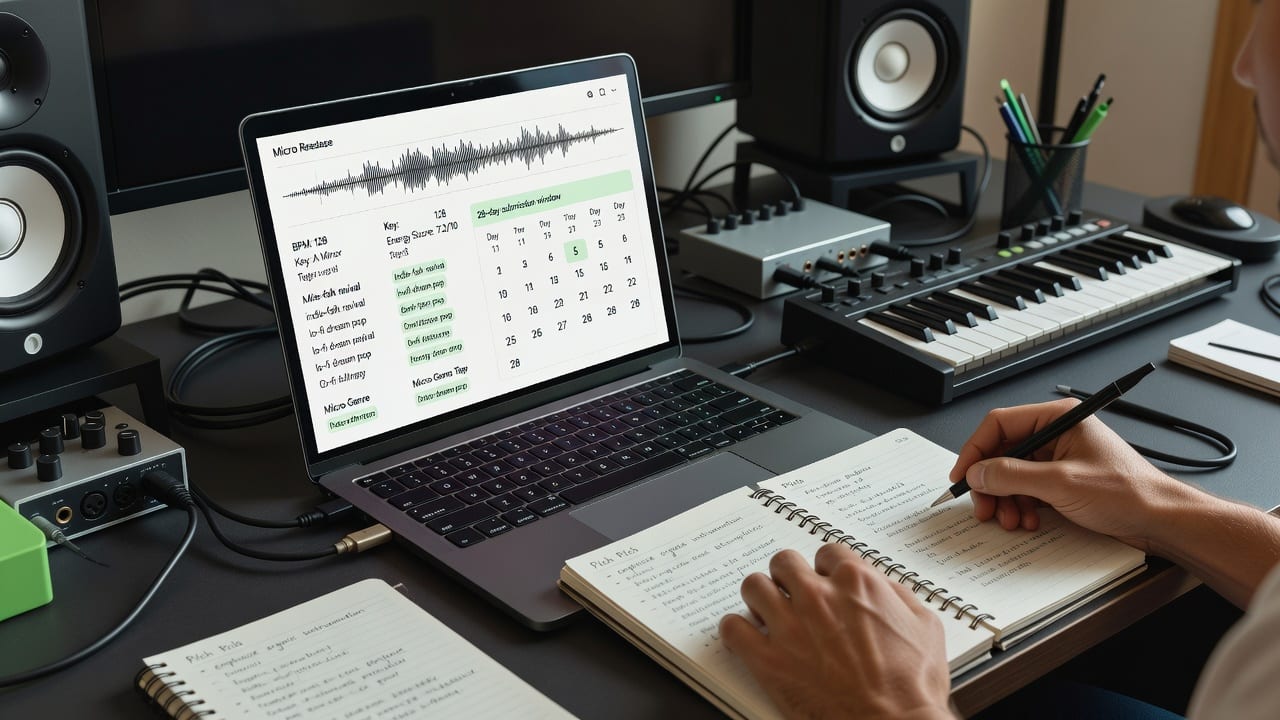
Audio analysis aligns metadata with editorial algorithms, boosting pitch acceptance rates to 67%.
What is a Data-Driven Spotify Pitch?
The landscape of Spotify editorial pitching has fundamentally shifted in 2026. Independent artists and labels can no longer rely on text-heavy, emotive descriptions to catch an editor's ear. Instead, success is defined by audio-first data submissions. A data-driven pitch translates the sonic characteristics of a track into the exact metadata tags and micro-genres that Spotify's internal algorithms use to categorize music.
| Pitching Method | Acceptance Rate |
|---|---|
| Generic adjectives + basic BPM counters | 20% |
| Comprehensive audio analysis + aligned metadata | 67% |
Spotify Pitch Acceptance Rates by Method
When to Apply Audio Analysis to Your Pitch
Timing is the most critical prerequisite for a successful editorial pitch. The optimal window to submit your track is 21 to 28 days before the release date. Submitting within this timeframe ensures your track is fully ingested by Spotify's backend systems, allowing both the algorithmic pre-filters and human editors ample time to review the data.
You must apply audio analysis before you lock in your pitch metadata. Pre-release buyers of the PitchPlus Full Package gain a significant advantage here. By analyzing their unreleased masters weeks in advance, they can identify the exact micro-genres, mood markers, and instrumentation tags that the audio naturally projects. If you wait until the week of release to analyze your track, you lose the ability to write a Spotify editorial pitch that gets accepted, as the system requires lead time to route the song to the appropriate genre-specific editors. Never attempt to pitch a track post-release; the Spotify for Artists editorial tool strictly requires unreleased music.
How to Implement Audio-First Pitching Strategies
Executing a data-driven pitch requires a systematic approach to metadata extraction and application. The goal is to remove human bias from your genre selection and replace it with verifiable sonic data.
Step 1: Run Comprehensive Audio Analysis
Upload your final master to an advanced audio analysis tool. The system will scan the waveform to identify acoustic properties, energy levels, and structural dynamics. This step replaces the guesswork of deciding whether your track is "Indie Pop" or "Dream Pop" by providing the exact sub-genre tags Spotify's algorithm will assign it.
Step 2: Identify the Star Moment
Spotify allows you to highlight a specific segment of your song for editors to preview. Do not default to the chorus. Use your analysis data to pinpoint the "Star Moment"—the exact timestamp where the track's energy peaks or its defining sonic characteristic is most prominent. Highlighting this data-backed timestamp drastically reduces the skip rate among human editors.
Step 3: Draft the Pitch Using Extracted Metadata
Translate the analysis into your 500-character pitch. Instead of writing, "This is a sad song about a breakup," use the data to write, "A melancholic Dream Pop track featuring a 110 BPM tempo, prominent acoustic guitar instrumentation, and low-energy acoustic markers suitable for 'Sad Indie' algorithmic routing." This approach directly feeds the data-driven strategies required to achieve a 67% Spotify pitch acceptance rate.
Why Premium Audio Analysis Beats Free Tools
Many independent artists attempt to cut costs by using free BPM counters or basic key detection software. While these tools provide surface-level data, they fail to map to Spotify's proprietary categorization matrix. Free tools often rely on outdated 2024 genre definitions, leaving artists pitching with tags that no longer exist in Spotify's active editorial ecosystem.
The PitchPlus Full Package claims its 67% acceptance rate specifically because it bridges this gap.
Expert Tips for Tracking Metrics and Iterating
Securing an editorial placement is not the end of the data lifecycle. Independent artists and labels must track the downstream effects of their audio-first pitches to refine future releases. Once your pitch is submitted, monitor the "Upcoming" tab in Spotify for Artists. If the pitch is accepted, note the specific playlist and cross-reference it with the micro-genres you submitted.
Even if a track misses a direct editorial placement, a perfectly aligned data pitch guarantees algorithmic optimization. By feeding the system accurate sonic data, you trigger highly targeted placements in Release Radar and Discover Weekly. Independent artists landing Spotify editorial playlists consistently analyze these algorithmic triggers. If a track pitched as "Dark Synth" performs exceptionally well in algorithmic playlists but misses editorial, the artist knows the data was accurate but the editorial queue was likely saturated. This insight allows labels to iterate, perhaps shifting the next release's pitch to a slightly less competitive adjacent micro-genre identified during the initial audio analysis.
Frequently Asked Questions
What is a good Spotify pitch acceptance rate?
In 2026, a standard text-based pitch has an acceptance rate of roughly 20%. However, pitches that utilize audio-first data analysis and precise metadata alignment achieve a significantly higher benchmark, often reaching a 67% acceptance rate.
How far in advance should I pitch my music to Spotify?
You should submit your pitch 21 to 28 days before your scheduled release date. This provides Spotify's algorithmic pre-filters and human editorial team enough time to process your audio data and route it to the correct genre curators.
Why is audio analysis better than writing a descriptive pitch?
Spotify's 2026 ingestion system relies heavily on machine learning to categorize music. If your written description uses genres or moods that conflict with the platform's automated sonic scan of your audio file, your pitch is often filtered out automatically. Audio analysis ensures your manual tags perfectly match the algorithm's assessment.
Can I pitch a song to Spotify editorial playlists after it is released?
No. The Spotify for Artists editorial pitching tool is exclusively for unreleased music. Once a track is live on the platform, it can no longer be pitched to editorial curators, though it can still be picked up by algorithmic playlists.
Sources & References
- How to Get on Spotify Playlists in 2026 - What Actually Works Now
The Spotify playbook has quietly been rewritten. Editorial placements now follow the algorithm, not the other way around, and artists who understand how to drive saves, retention, and off-platform traffic are pulling ahead. This is a practical look at what’s changed and how to adapt before you fall behind.
Reading is the easy part.
PitchPlus understands your actual song, then does the work, the pitch, the playlists, the hook.
Get your Spotify editorial pitch written
The pitch plus the genre and mood metadata Spotify routes on, written from your actual song. Not a 500 character box you fill in blind.
Match your song to the right Spotify playlists
Every playlist match scored against what your song actually is, then ranked by fit.
Find your song's viral hook
The best 30 seconds of your song for Reels and TikTok, found automatically.