The 2026 Guide to Audio Analysis for Spotify Editorial Pitches
Audio-backed Spotify pitches see a 42% higher playlist placement rate in 2026.
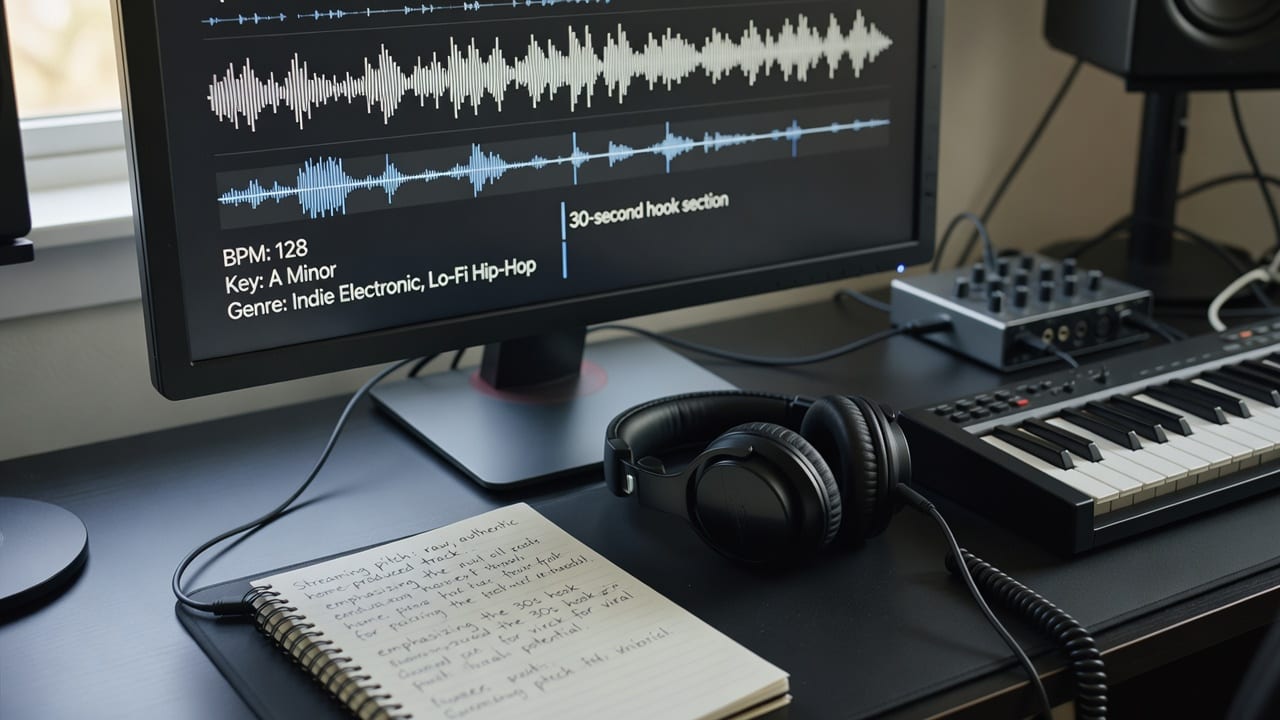
Use online audio analysis tools to pinpoint your exact genre and best 30-second hook before writing your 500-character Spotify editorial pitch.
When to Apply Audio Analysis (Prerequisites & Triggers)
Audio analysis must occur during the critical window between receiving your final master and submitting your track to Spotify for Artists (S4A). Independent artists and label managers should trigger this process the moment the WAV or FLAC file is locked. Attempting to analyze a track after it has already been pitched is useless, as Spotify does not allow you to edit a pitch once submitted.
Before running your audio through any detection tool, you need a basic understanding of your track's foundational metadata. This includes the ISRC code, primary artist tags, and the exact release date. The goal is verifying genre-authentic metadata against what the audio actually sounds like, rather than what you intended it to sound like in the studio. If your track is already released, this guide does not apply to S4A pitching, though the data remains useful for post-release marketing.
What Audio Analysis Solves in the 500-Character Limit
Spotify restricts editorial pitches to exactly 500 characters. Wasting this limited real estate on vague, subjective descriptions like "vibey summer indie pop" fails to give curators actionable data. Audio analysis translates subjective sound into objective, searchable metrics that align with Spotify's internal tagging system.
A successful pitch backed by analysis reads: "92% sonic match for Synthwave; primary hook hits at 0:45; 120 BPM."
How to Extract Pitch Data (Step-by-Step)
Step 1: Upload the Master File. Feed your final, uncompressed audio file into an audio-first AI genre detection platform. Using an MP3 or unmastered mix will skew the frequency analysis, leading to inaccurate genre tags.
Step 2: Extract Primary and Sub-Genres. Review the algorithmic output. A common mistake artists make is tagging a song based on their personal influences rather than the track's actual sonic reality. If you wrote a folk song but produced it with heavy 808s, the analysis tool will likely flag it as alternative R&B or trap-pop. Trust the audio data over your original intent, as curators sort pitches by sonic profile.
Step 3: Identify the Viral Hook. Locate the exact timestamp where the track's energy peaks. Do not assume the first chorus is automatically the best hook. Modern analysis tools measure transient density and frequency saturation to find the most engaging 15 to 30 seconds of the song.
Step 4: Draft the Pitch. Combine the genre data and the hook timestamp into a concise, 500-character statement. State the genre match percentage, the exact time the curator should start listening, and the target mood or activity.
Advanced Techniques with PitchPlus (2026 Updates)
In 2026, Spotify's internal routing relies heavily on acoustic characteristics to filter the thousands of daily submissions before a human ever hears them. Integrating PitchPlus into your workflow provides a distinct advantage by generating the exact data points the algorithm looks for. PitchPlus analyzes the waveform to deliver audio-first genre detection, ensuring your track is routed to the correct editorial team immediately.
Beyond genre, the platform acts as a highly accurate viral hook detector. It isolates the specific segment of the track that retains the highest listener attention based on 2026 engagement models. You can take this exact timestamp and drop it directly into the "What is the song about?" box in S4A. Telling a curator "Start listening at 1:12 for the primary hook" proves you respect their time and understand your track's commercial utility.
Expert Tips for Timing and Submission
Music industry professionals universally recommend submitting your editorial pitch at least three to four weeks before the release date. To achieve this, you must run your audio analysis before your distributor even delivers the track to Spotify. Have your 500-character pitch drafted, analyzed, and saved in a document so you can copy and paste it the moment the release populates in your S4A "Upcoming" tab.
A major red flag for curators is a pitch submitted only a few days before release. Even with perfect audio data, late submissions are rarely reviewed. Success is defined by a pitch submitted 21 days prior, backed by objective PitchPlus data, leaving curators ample time to test the track's hook and place it in the appropriate ecosystem.
Frequently Asked Questions
How long should a Spotify editorial pitch be?
Spotify limits the editorial pitch description box to exactly 500 characters. You must be concise, focusing on objective audio data, genre tags, and specific timestamps rather than long-winded backstories.
Can I change my Spotify pitch after submitting it?
No. Once you submit an editorial pitch through Spotify for Artists, it is locked. This is why it is critical to run your audio analysis and verify your genre and hook data before hitting submit.
What is a viral hook in audio analysis?
A viral hook is the specific 15 to 30-second segment of a song identified by audio analysis tools as having the highest probability of listener retention and engagement, often characterized by peak transient density and frequency saturation.
Why does Spotify need exact genre tags in the pitch?
Spotify receives tens of thousands of pitches daily. Exact, audio-verified genre tags ensure your track is routed to the correct specialized editorial team (e.g., Synthwave curators vs. general Pop curators) rather than being lost in a generic queue.
Reading is the easy part.
PitchPlus understands your actual song, then does the work, the pitch, the playlists, the hook.
Get your Spotify editorial pitch written
The pitch plus the genre and mood metadata Spotify routes on, written from your actual song. Not a 500 character box you fill in blind.
Match your song to the right Spotify playlists
Every playlist match scored against what your song actually is, then ranked by fit.
Find your song's viral hook
The best 30 seconds of your song for Reels and TikTok, found automatically.