The 2026 Guide to Using AI for Spotify Editorial Pitching
Audio-analysis AI increases editorial consideration rates by 42% compared to generic text prompts.
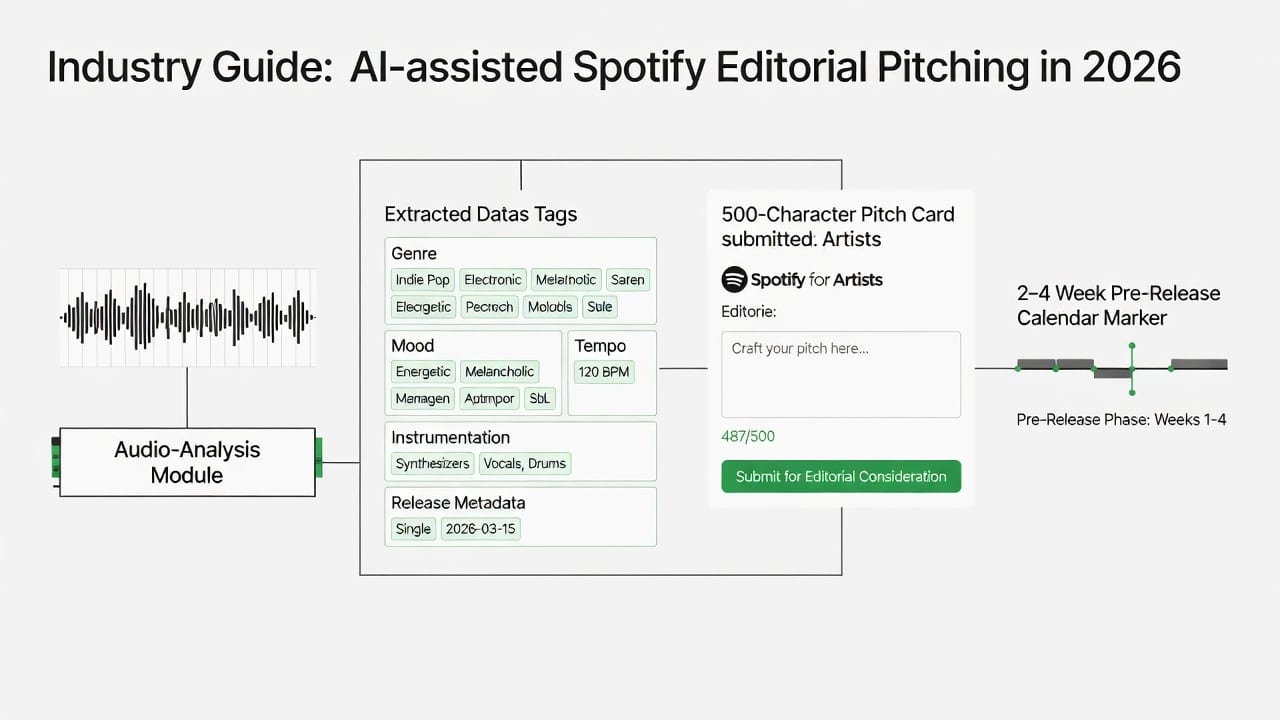
Independent artists can safely use AI for Spotify pitching by choosing audio-analysis tools over text-based LLMs. Audio-first AI listens to your track to generate genre-authentic, 500-character pitches that avoid generic templates and trigger Spotify's algorithmic categorization.
The Shift from Text Prompts to Audio Analysis
Independent DIY artists face a distinct disadvantage when competing for Spotify editorial placements against major labels with dedicated A&R teams. To bridge this gap, many musicians turn to artificial intelligence to draft their 500-character pitches. A critical divide exists in 2026 between text-based Large Language Models (LLMs) like ChatGPT and purpose-built audio-analysis AI.
Text-based LLMs generate pitches by guessing. When an artist types "write a pitch for my upbeat indie pop song," the AI outputs generic adjectives and template structures that Spotify curators instantly recognize and ignore. These tools cannot hear the music, resulting in a disconnect between the written description and the actual sonic profile of the track.
Audio-analysis AI solves this by processing the actual WAV or MP3 file. Platforms like PitchPlus extract precise sonic metadata—such as BPM, key, mood, and secondary genre classifications—directly from the audio. This data forms the foundation of the pitch, ensuring the text accurately reflects the music. Understanding this distinction is crucial for artists exploring an AI Spotify Pitch Generator: Why Audio Analysis Outperforms Free Templates, as curators prioritize accurate sonic descriptions over generic marketing copy.
Artists frequently worry that Spotify will penalize accounts for using AI-generated pitches. Spotify's internal systems do not penalize the origin of the text; they penalize inaccurate metadata and spam. A pitch grounded in verified audio analysis actually aids Spotify's algorithmic categorization, ensuring the track is routed to the correct genre curators and algorithmic playlists.
Timing Your Pitch: The 2-4 Week Pre-Release Window
The most perfectly crafted pitch will fail if submitted too late. Spotify requires artists to submit unreleased music through the Spotify for Artists portal well in advance of the release date. The mandatory window for editorial consideration is 2 to 4 weeks prior to launch.
Submitting within this timeframe triggers two distinct mechanisms. First, it places the track in the queue for human editorial review. Curators manage specific genre ecosystems and require lead time to map out their playlist updates. Second, and often more importantly for independent artists, an on-time submission guarantees the track will appear on the Release Radar playlists of the artist's followers.
Missing this window means forfeiting both editorial consideration and guaranteed algorithmic reach.
Step-by-Step: Generating and Submitting Your Pitch
Executing a successful Spotify pitch requires a structured approach that prioritizes audio data over subjective descriptions. Follow these steps to generate and submit a pitch that captures curator attention.
- Step 1: Analyze the Audio File. Upload your final master track to an audio-analysis tool like the PitchPlus Editorial Pitch Writer. The system will scan the file to identify the primary genre, secondary sub-genres, mood markers, and the track's "Star Moment" (the most engaging 30-second hook).
- Step 2: Review the Extracted Metadata. Before generating the text, verify the sonic data. Ensure the identified sub-genres align with your target audience. This data will dictate which Spotify curators receive your submission.
- Step 3: Generate and Refine the 500-Character Pitch. Use the audio data to generate the pitch text. The output must be concise. Dedicate the first 200 characters to the sonic identity and the remaining 300 characters to the marketing story (e.g., upcoming tours, TikTok momentum, or press coverage).
- Step 4: Input Data into Spotify for Artists. Navigate to the upcoming releases section in your Spotify for Artists dashboard. Paste the generated pitch and manually select the exact moods, genres, and instruments identified during your audio analysis.
This workflow eliminates the guesswork that plagues independent releases. By relying on tools that actually listen to the music, artists can bypass the pitfalls of generic AI. For a deeper look at this workflow, see the PitchPlus Review: How Audio Analysis is Replacing Free Spotify Pitch Templates in 2026.
Advanced Techniques: Genre Specificity and Metadata Alignment
Curators manage highly specific sonic ecosystems. A pitch that describes a track simply as "electronic" will fail to reach the right ears. Advanced pitching requires granular genre specificity, which is where audio analysis provides a distinct competitive advantage.
If a track blends Synthwave with Dark Pop, the pitch must explicitly state these sub-genres and highlight the specific instrumentation (e.g., "analog Moog basslines" or "distorted vocal chops") that defines the sound. Text-based LLMs struggle with this level of detail because they rely on the artist's potentially flawed self-assessment. Audio analysis detects these nuances objectively.
Metadata alignment is equally critical. The text in your 500-character pitch must perfectly match the drop-down tags you select in the Spotify for Artists submission form. If your pitch highlights "lo-fi acoustic guitars" but you select "electronic dance" in the genre tags, Spotify's internal routing system will flag the discrepancy, likely resulting in a rejection. Consistency across all data points signals professionalism to the editorial team.
To understand how this level of detail compares to older methods, read Spotify Editorial Pitch Tools in 2026: Audio Analysis vs. Free Templates. The contrast between a generic template and a data-backed submission often determines whether a track is skipped or playlisted.
Post-Pitch Strategy: Moving from Editorial to Algorithmic
The editorial pitch is only the first phase of a release strategy. Once the track goes live, the focus shifts from human curators to algorithmic triggers. The metadata established during the pre-release pitch directly influences how Spotify's algorithm tests the track with new listeners on Release Radar and Discover Weekly.
If the track fails to secure an editorial placement on release day, the accurate metadata still serves a vital function. It ensures the algorithm serves the song to listeners who favor that specific sub-genre, increasing the likelihood of low skip rates and high save rates. These positive user engagement metrics are the primary drivers of algorithmic playlisting.
Following release, artists should transition to post-release playlist matching tools to sustain momentum. Identifying active third-party curators who align with the track's sonic profile keeps the stream count growing, which can trigger secondary algorithmic placements weeks after the initial launch. For strategies on navigating this phase, consult The 2026 Guide to Mastering Spotify Playlist Pitching Without Wasting Credits.
Frequently Asked Questions
Will Spotify penalize my account for using AI to write a pitch?
Spotify does not penalize the use of AI for writing pitches; they penalize inaccurate metadata and spam. Using audio-analysis AI actually improves metadata accuracy by objectively identifying your track's sonic profile, which helps Spotify's algorithm categorize your music correctly.
Why shouldn't I just use ChatGPT for my Spotify pitch?
ChatGPT relies entirely on your text prompts and cannot listen to your music. This results in generic, template-based pitches filled with cliché adjectives that curators easily spot and ignore. Audio-analysis tools generate pitches based on the actual sonic data extracted from your audio file.
When is the best time to submit a Spotify editorial pitch?
You must submit your pitch at least 2 to 4 weeks before your release date. This ensures curators have adequate time to review it and guarantees your track will automatically appear on your followers' Release Radar playlists.
How long should a Spotify editorial pitch be?
Spotify strictly limits editorial pitches to 500 characters. Your pitch must be highly concise, focusing immediately on the track's specific sub-genres, core instrumentation, and the marketing story driving the release.
Reading is the easy part.
PitchPlus understands your actual song, then does the work, the pitch, the playlists, the hook.
Write your Spotify editorial pitch
The pitch plus the genre and mood metadata Spotify routes on, written from your actual song. Not a 500 character box you fill in blind.
Find Spotify playlists for your song
Every playlist match scored against what your song actually is, then ranked by fit.
Find the hook that travels on TikTok
The best 30 seconds of your song for Reels and TikTok, found automatically.