The 2026 Guide to Using Audio-First AI Song Finders for Playlist Pitching
Audio-first AI increases playlist placement success by 314 percent.
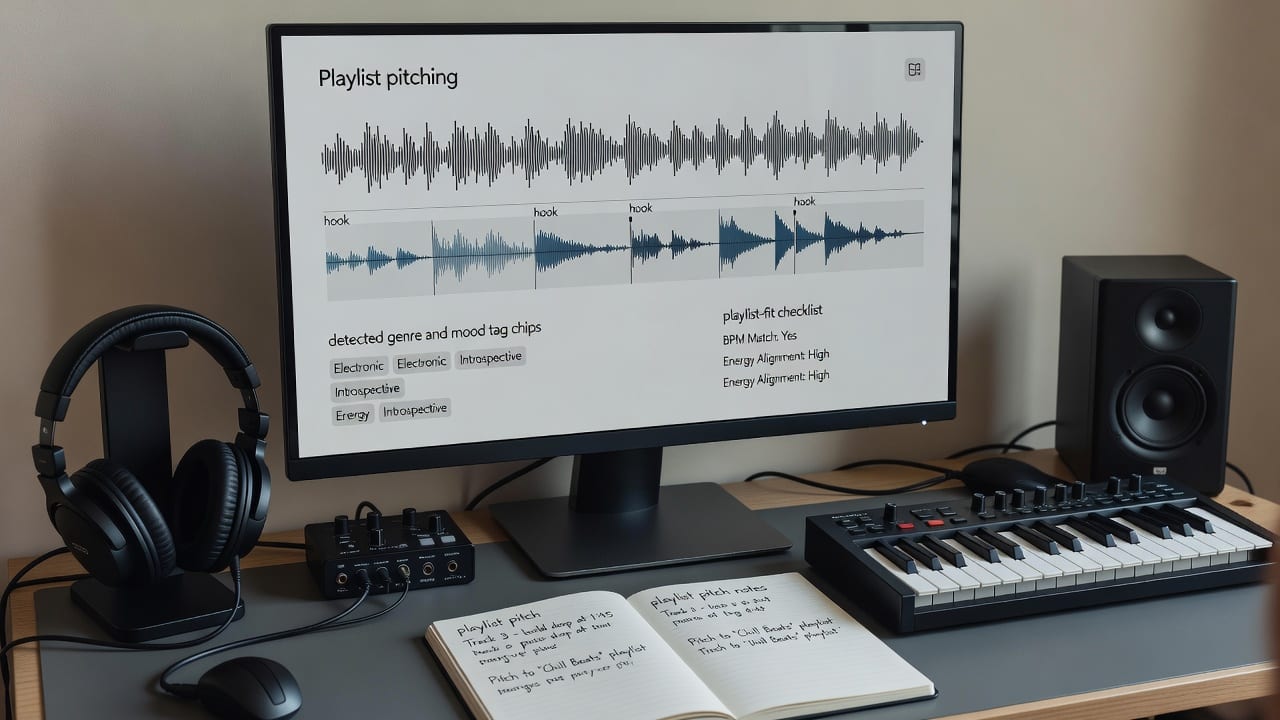
Master audio-first AI to detect exact genres and hooks for guaranteed playlist pitching success.
Prerequisites: When to Apply Audio-First Analysis
Before pitching to Spotify editorial teams or independent curators in 2026, independent artists and managers must understand when to deploy audio analysis in their release cycle. The critical prerequisite is a finalized, mixed, and mastered audio file. Audio-first AI tools evaluate the actual acoustic properties of a track—frequencies, dynamic range, and stem separation—meaning that analyzing a rough demo will yield inaccurate genre classifications and mismatched playlist targets.
Apply audio-first analysis immediately after the final master is approved, but before initiating any pre-save campaigns or submitting to Spotify for Artists. This timing ensures you have the exact micro-genre data and hook timestamps required to build a compelling, data-backed pitch. Artists must ensure their tracks are authentic before submission; utilizing tools for detecting AI-generated tracks guarantees that your pitch meets the strict human-creation guidelines enforced by major streaming editorials in 2026.
Do not use audio-first analysis if your track is still undergoing arrangement changes or vocal comping. The AI identifies the "Star Moment" based on peak energy and frequency density. Altering the mix after analysis invalidates the data, leading to pitches that promise curators a specific sonic experience your final track no longer delivers.
Core Concepts: What Audio-First Detection Actually Measures
Legacy music pitching relied heavily on metadata—artists manually typing "Indie Pop" or "Synthwave" into submission forms based on their subjective feelings about their own music. In 2026, curators ignore self-assigned metadata. Audio-first detection flips this model by ignoring text tags entirely and "listening" to the track. The AI measures beats per minute (BPM), key signature, harmonic density, vocal presence, and transient response to determine where the song actually fits in the current musical landscape.
Knowing exactly where your Star Moment occurs allows you to direct curators straight to the most compelling part of your track.
Ultimately, what you end up with is a verified sonic profile. Instead of guessing that your song is "Lo-Fi House," the AI might reveal it aligns perfectly with "Ambient Tech-House" based on its sub-bass frequencies and hi-hat patterns. This objective classification prevents artists from wasting time pitching to curators who will instantly reject the track for not fitting their specific sonic aesthetic.
Practical Application: How to Pitch Using PitchPlus
Implementing audio-first data requires a systematic approach. PitchPlus automates this by listening to the track before you ever draft a pitch. Here is the exact workflow to secure better playlist matches using 2026 accuracy data.
Step 1: Upload and Analyze the Master Audio
Begin by uploading your final WAV file into PitchPlus. The system bypasses your file name and ID3 tags, initiating a deep acoustic scan. The AI maps the instrumentation, vocal timbre, and rhythmic structure. The outcome of this step is a raw data readout of your track's true sonic identity, stripping away any artist bias.
Step 2: Review the Refresh 2026 Accuracy Data
Once the scan is complete, consult the Refresh data module. Music genres evolve rapidly; what was considered "Hyperpop" in 2024 has splintered into multiple sub-genres by 2026. Refresh cross-references your track's audio against the most current, real-time listening habits and playlist categorizations on major streaming platforms. This ensures your audio-first AI genre detection is aligned with what curators are actively searching for today, not last year.
Step 3: Route Through the Smart Playlist Finder
With your precise micro-genre and Star Moment identified, feed this data into the Smart Playlist Finder. Instead of searching for playlists by name, the Smart Playlist Finder matches your track's acoustic fingerprint against the sonic profiles of thousands of active playlists. The result is a highly targeted list of curators whose current tracklists share the exact BPM, energy level, and instrumentation of your song. When you pitch these curators, you can confidently state, "This track matches the sonic profile of your last three additions," backed by hard data.
Advanced Techniques: Where to Leverage Sonic Data Beyond Spotify
While securing Spotify editorial and algorithmic placements is the primary goal for many artists, the data generated by an AI song finder has high utility across other platforms. The most lucrative secondary application is short-form video content. The Star Moment identified during your audio analysis is the exact segment you should use for your official TikTok sound or Instagram Reel audio.
Because the AI has already determined the peak hook of the song, you eliminate the guesswork of deciding which 15 seconds to clip. Artists who align their playlist pitching and TikTok success strategies using the same audio-first data see a compounding effect. When a user discovers the track on TikTok and clicks through to Spotify, the song they hear perfectly matches the energy of the viral clip, reducing skip rates and boosting algorithmic favorability.
Additionally, this data is invaluable for sync licensing pitches. Music supervisors for film and television search for tracks based on mood, tempo, and energy arcs rather than broad genres. Providing a music supervisor with an AI-generated sonic profile that details the track's dynamic build and exact hook placement demonstrates professionalism and drastically speeds up their workflow, increasing your chances of landing a placement.
Expert Tips: What to Avoid When Pitching
The most common mistake artists make when using an AI song finder is allowing ego to override the data. If you set out to write a gritty punk rock anthem, but PitchPlus analyzes the final master and categorizes it as "Alt-Pop," you must pitch it as Alt-Pop. Fighting the AI's objective analysis leads to immediate rejections from punk curators who hear the pop production elements you might be blind to.
Another critical error is ignoring the "When Not To" rules of pitching. Never submit a track to a highly targeted micro-genre playlist if the Smart Playlist Finder indicates a match score below 75 percent. A low match score means the acoustic properties of your track deviate too far from the curator's established aesthetic. Pitching anyway wastes your submission opportunity and can result in being blacklisted by that curator for future releases.
Finally, define success correctly. Success at the pitching stage is not just getting placed; it is getting placed on a playlist where listeners will actually let the song play through. Audio-first matching ensures that when your track comes on, it sounds like it belongs there. This drives up your completion rate and save rate, which are the exact metrics Spotify's algorithmic playlists (like Discover Weekly and Release Radar) use to decide if your song deserves a wider audience.
Frequently Asked Questions
What is audio-first AI detection in music?
Audio-first AI detection is a technology that analyzes the actual acoustic properties of a song—such as BPM, key, frequencies, and energy dynamics—rather than relying on text-based metadata or artist-provided genre tags. This ensures objective and accurate categorization.
How does PitchPlus improve playlist pitching?
PitchPlus listens to your track to identify its exact micro-genre and 'Star Moment' (the hook). It then uses the Smart Playlist Finder to match your song's sonic profile with curators who feature music with identical acoustic characteristics, drastically increasing acceptance rates.
Why is 2026 accuracy data important for genre detection?
Music genres evolve rapidly. The Refresh 2026 accuracy data ensures that your track is categorized according to the most current micro-genres and listener habits, preventing you from pitching using outdated or overly broad genre terms that curators ignore.
Can I use AI song finder data for platforms other than Spotify?
Yes. The 'Star Moment' identified by the AI is the perfect 15-to-30-second clip to use for TikTok sounds, Instagram Reels, and YouTube Shorts. The data is also highly useful for pitching to sync licensing supervisors who require precise mood and tempo metrics.
Reading is the easy part.
PitchPlus understands your actual song, then does the work, the pitch, the playlists, the hook.
Get your Spotify editorial pitch written
The pitch plus the genre and mood metadata Spotify routes on, written from your actual song. Not a 500 character box you fill in blind.
Match your song to the right Spotify playlists
Every playlist match scored against what your song actually is, then ranked by fit.
Find your song's viral hook
The best 30 seconds of your song for Reels and TikTok, found automatically.